Common Chuckwalla
Sauromalus ater

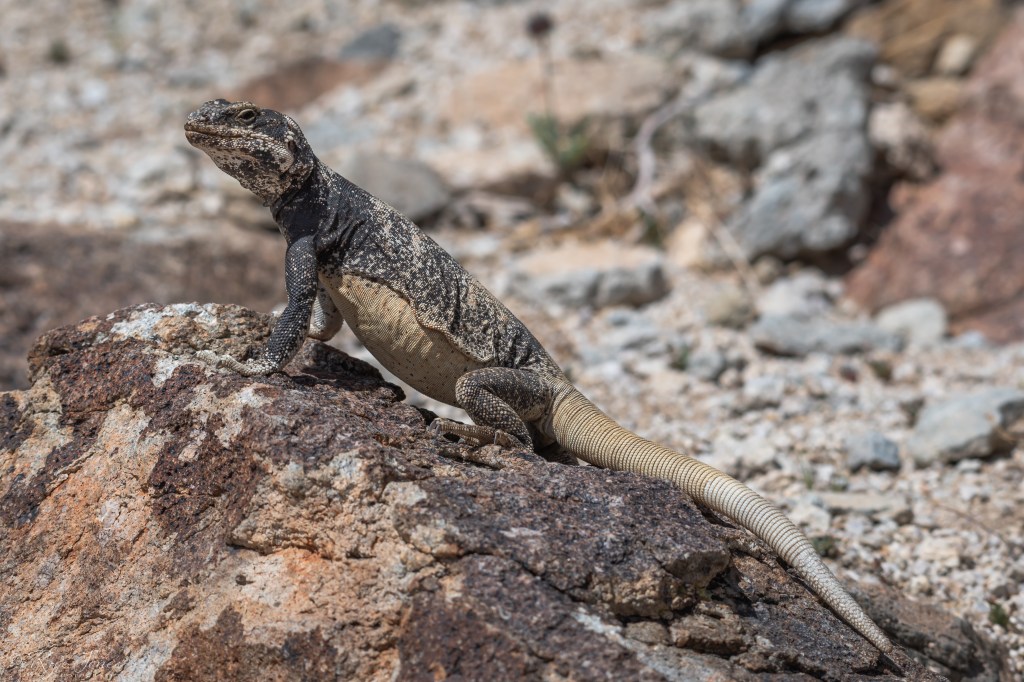
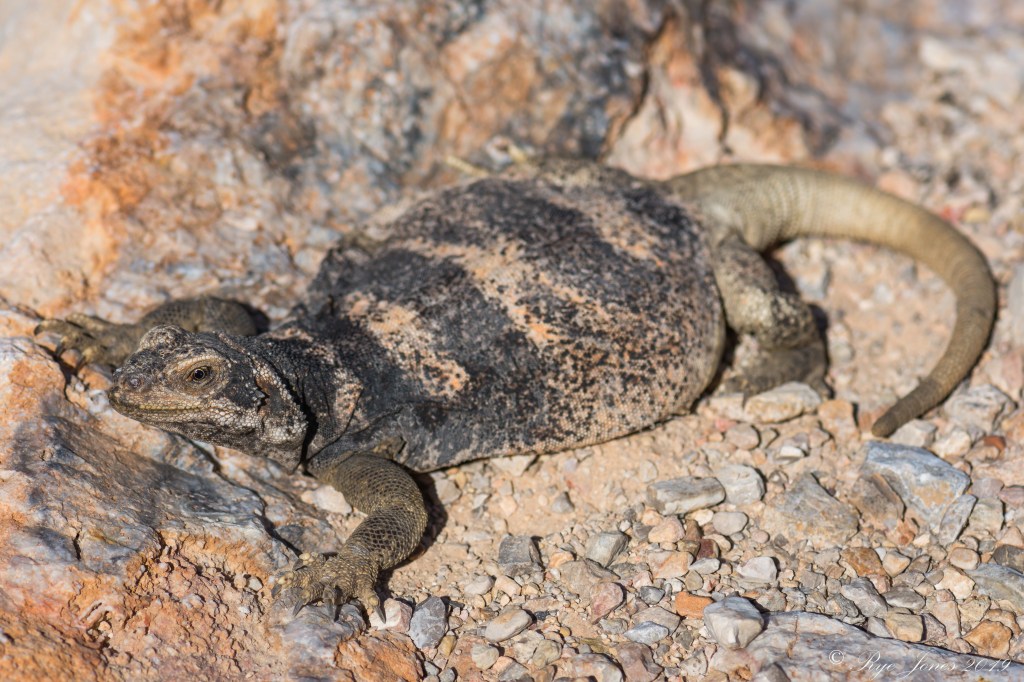

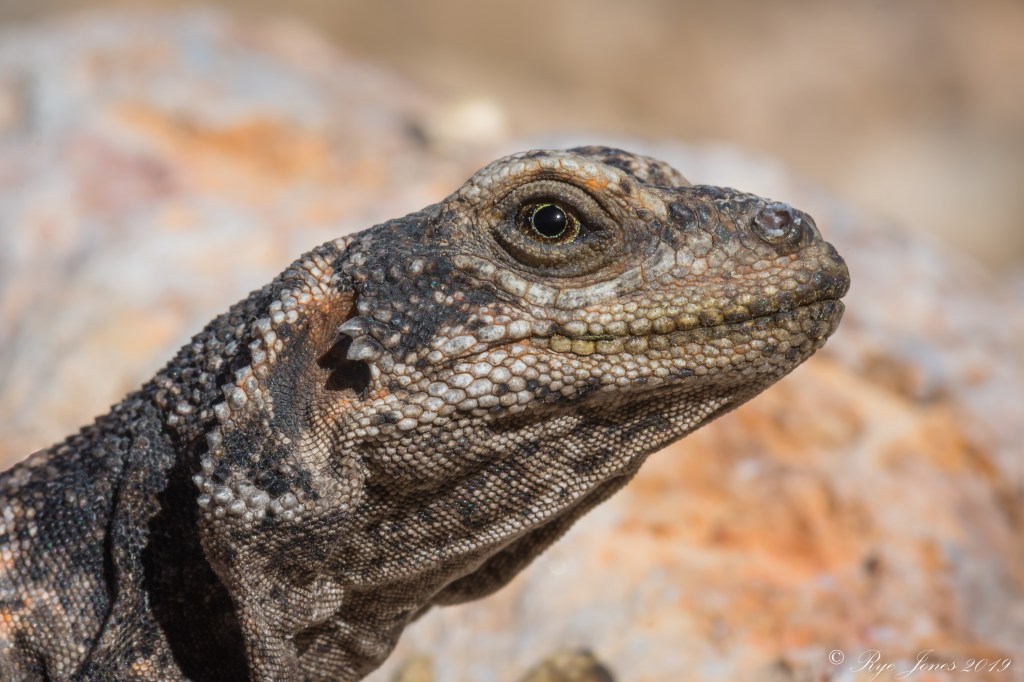
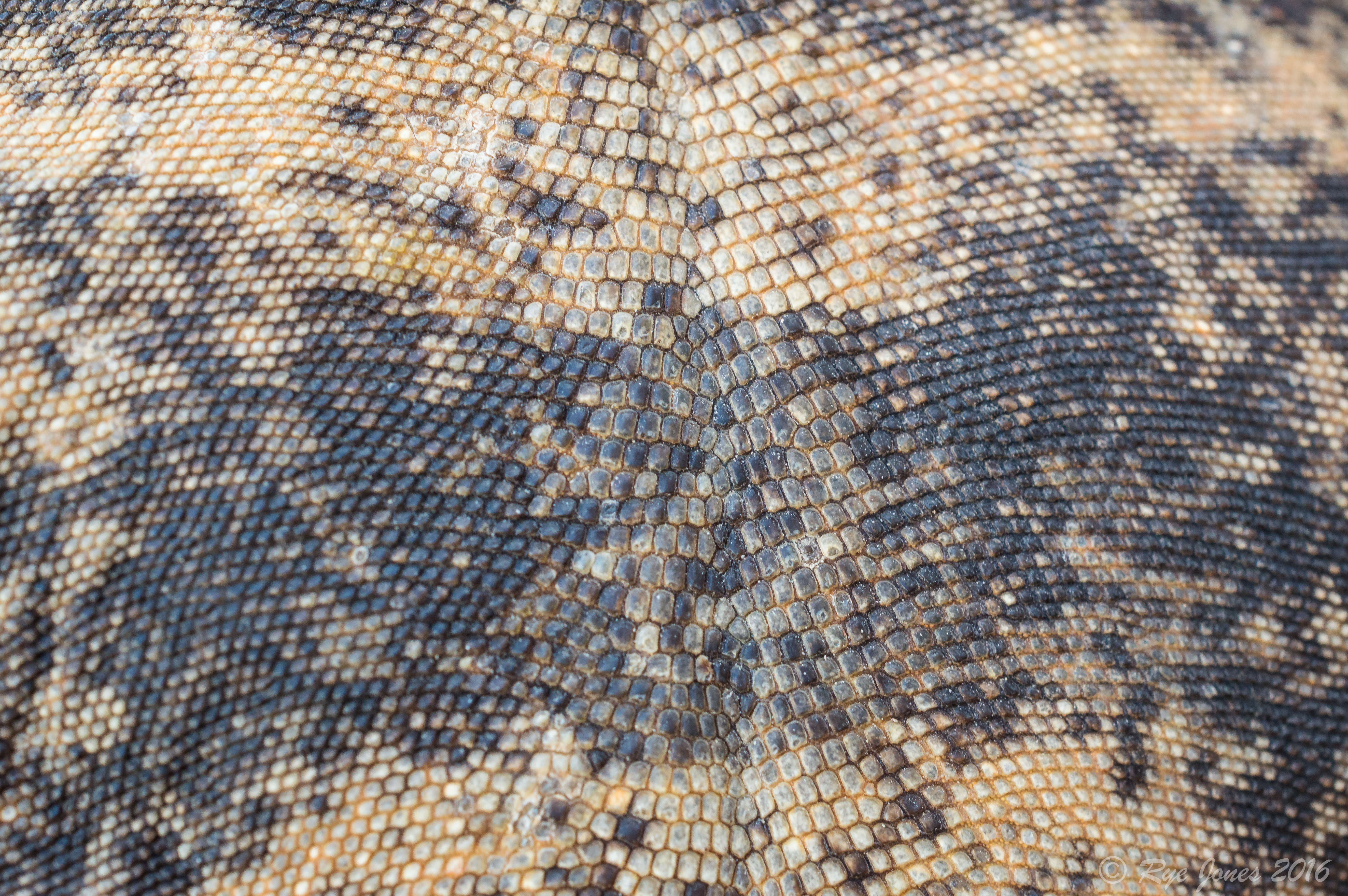
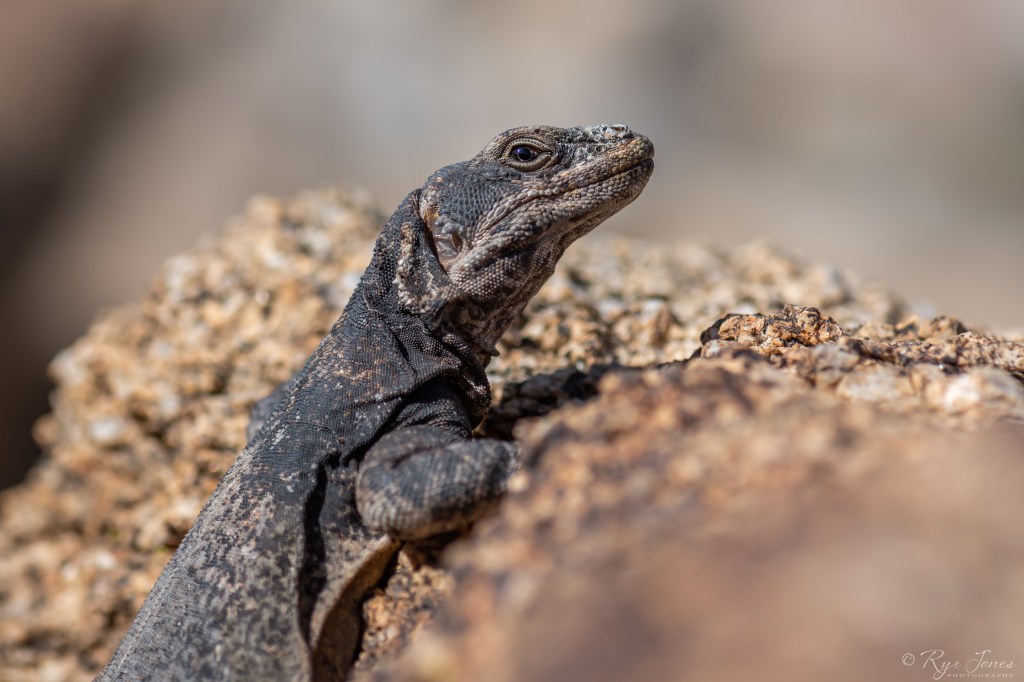
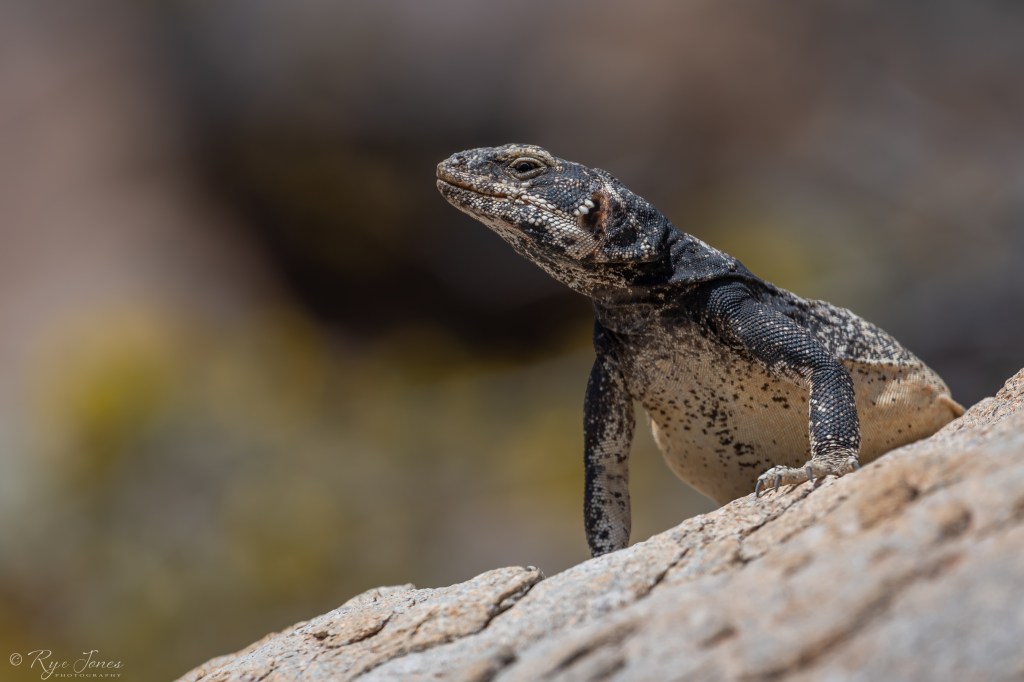
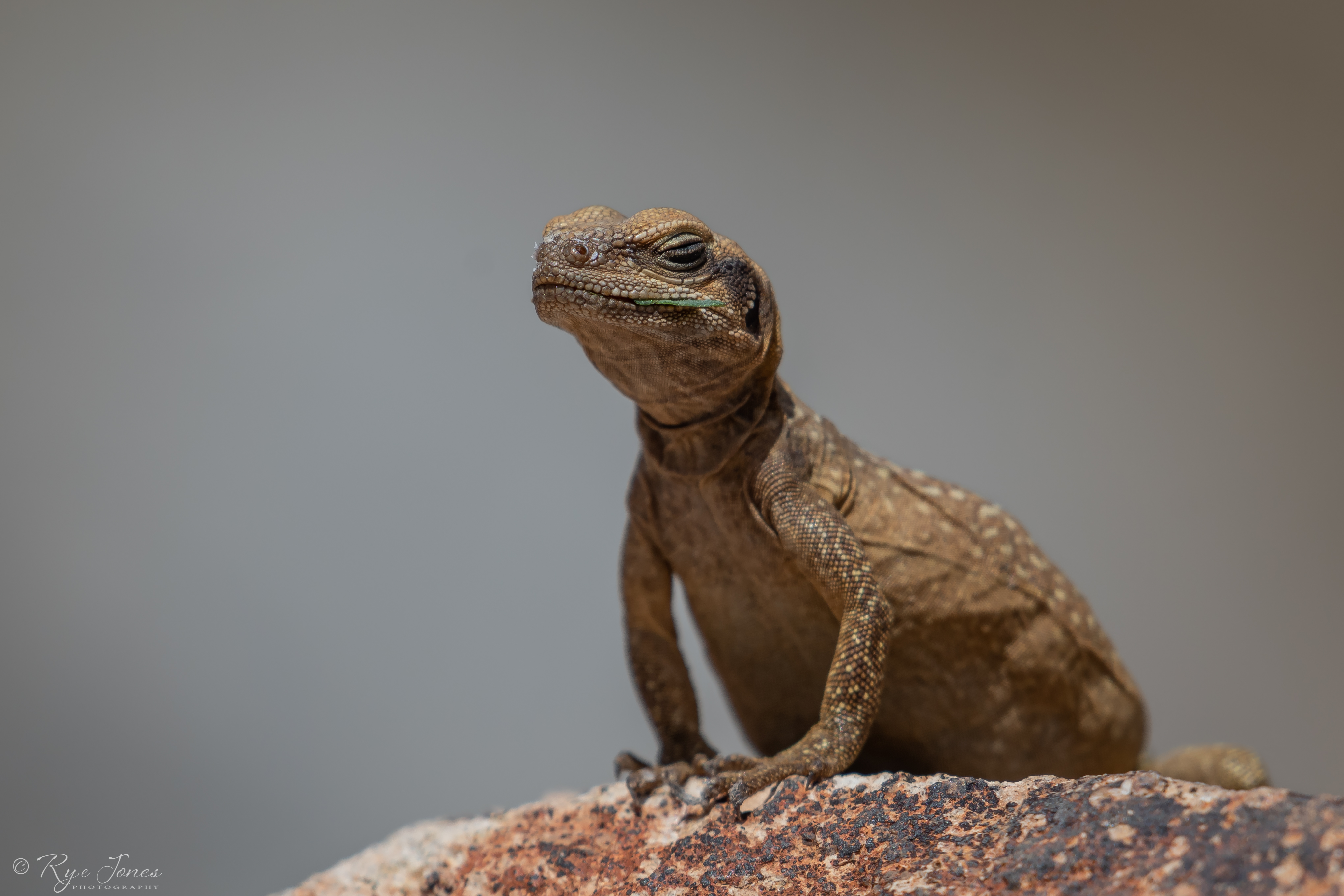
Description: Tan, cream, or gray base color. The heads and limbs of males are typically darker, with a uniformly light-colored tail that contrasts with the body. Females and juveniles typically have a more banded pattern. Females may have a light-colored tail, but it contrasts less with the body. Body pattern has various degrees of speckling or mottling in adults. Loose folds of skin on the body and neck. The tail has a blunt tip.
Size: A large, heavy-bodied lizard that averages 10 to 12 inches in total length. This is the second-largest lizard species in Utah.
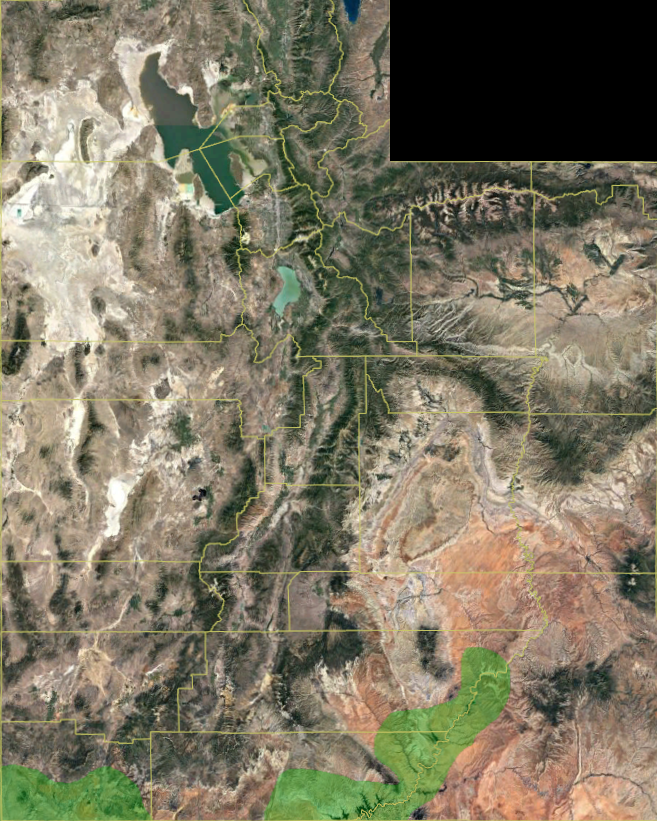
Range and Habitat: This lizard occurs in the Mojave Desert region of Washington County. It also occurs through Glen Canyon northward along the Colorado River and its adjacent tributaries. It inhabits rocky slopes, rock outcrops, and boulder fields with lots of crevices to retreat to. It can be found below 4,000 feet in elevation.
Similar Species: This large, distinctive lizard is not easily confused with any other species in Utah.
 The Reptiles and Amphibians of Utah