Great Basin Rattlesnake
Crotalus oreganus lutosus
Venomous
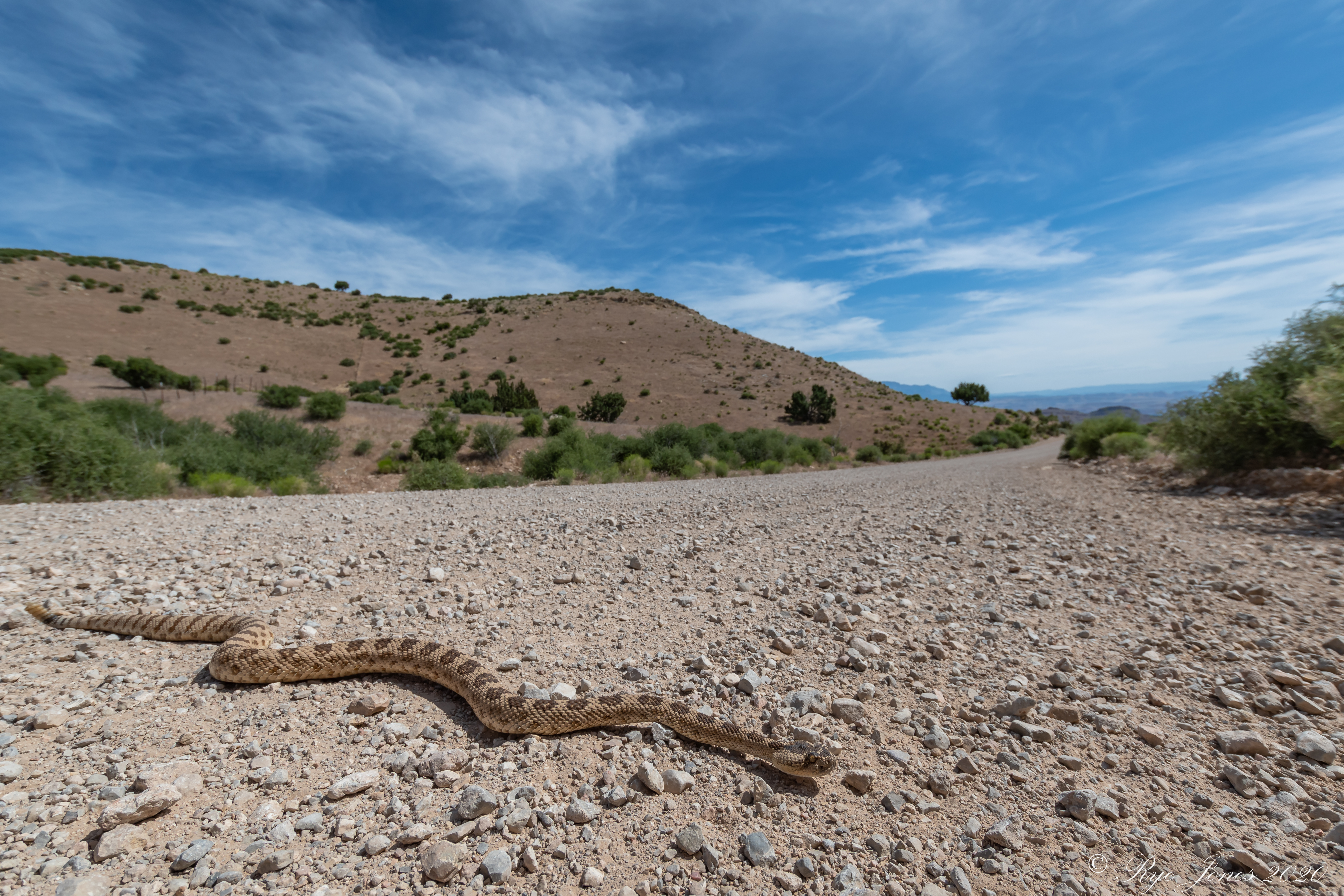
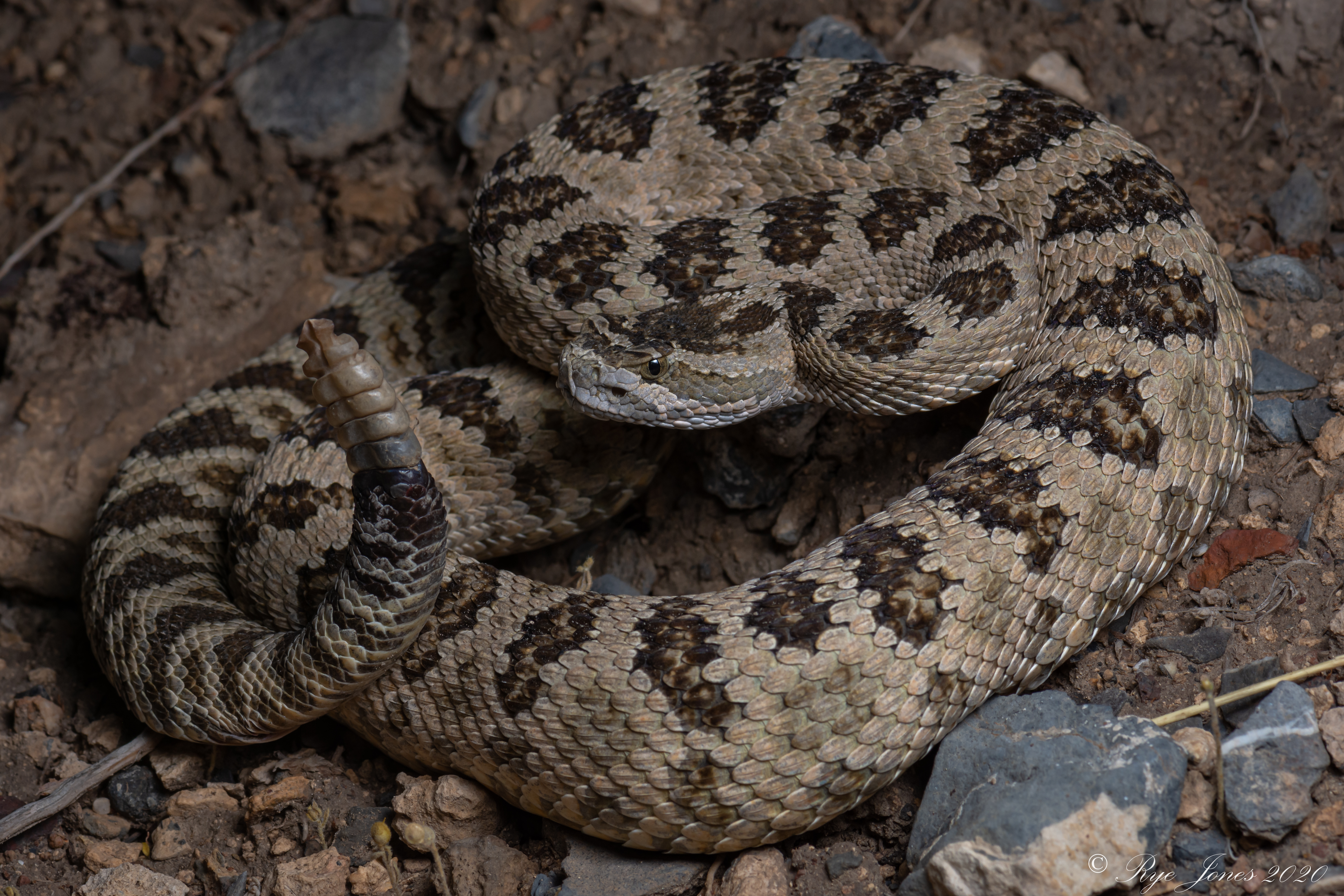
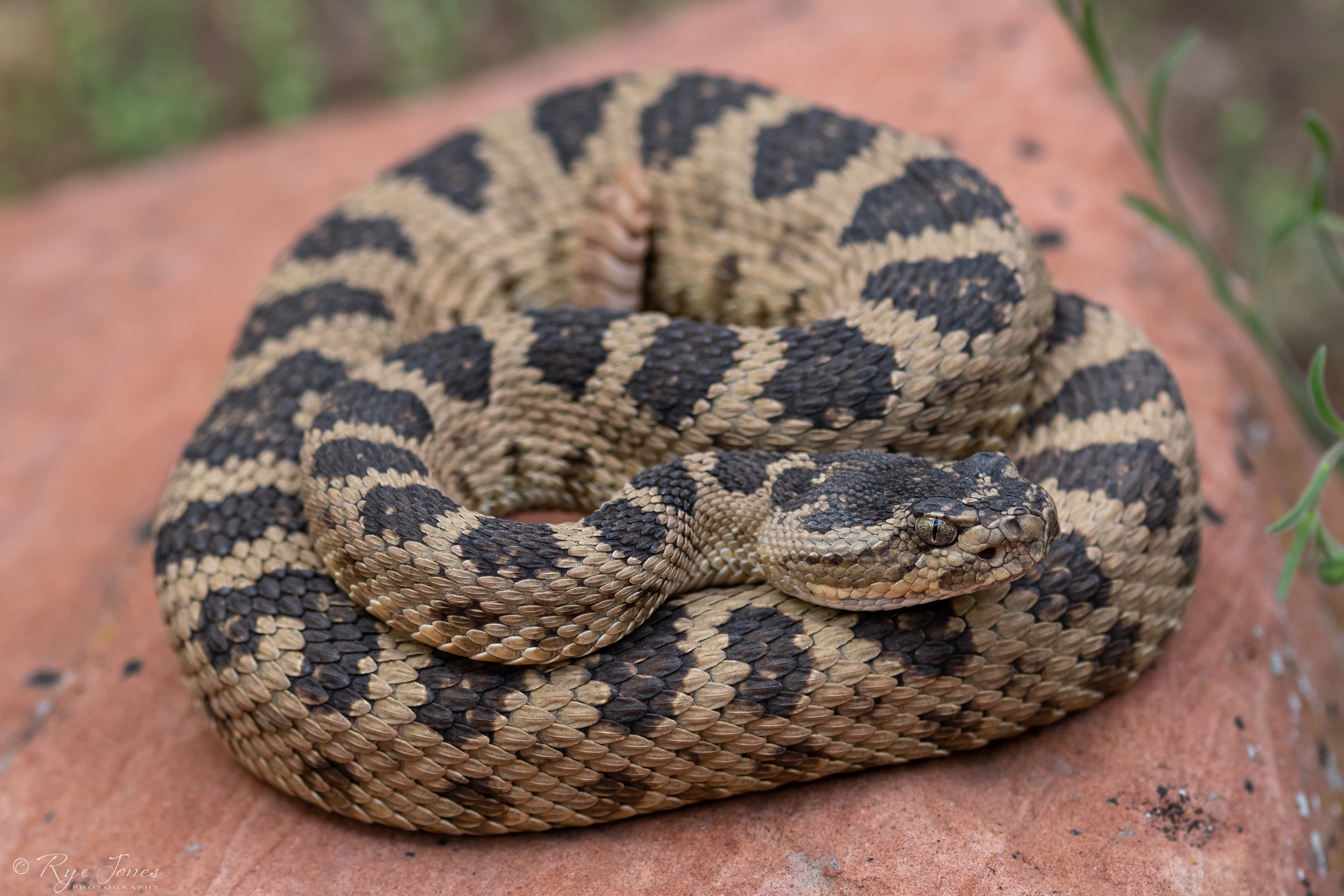
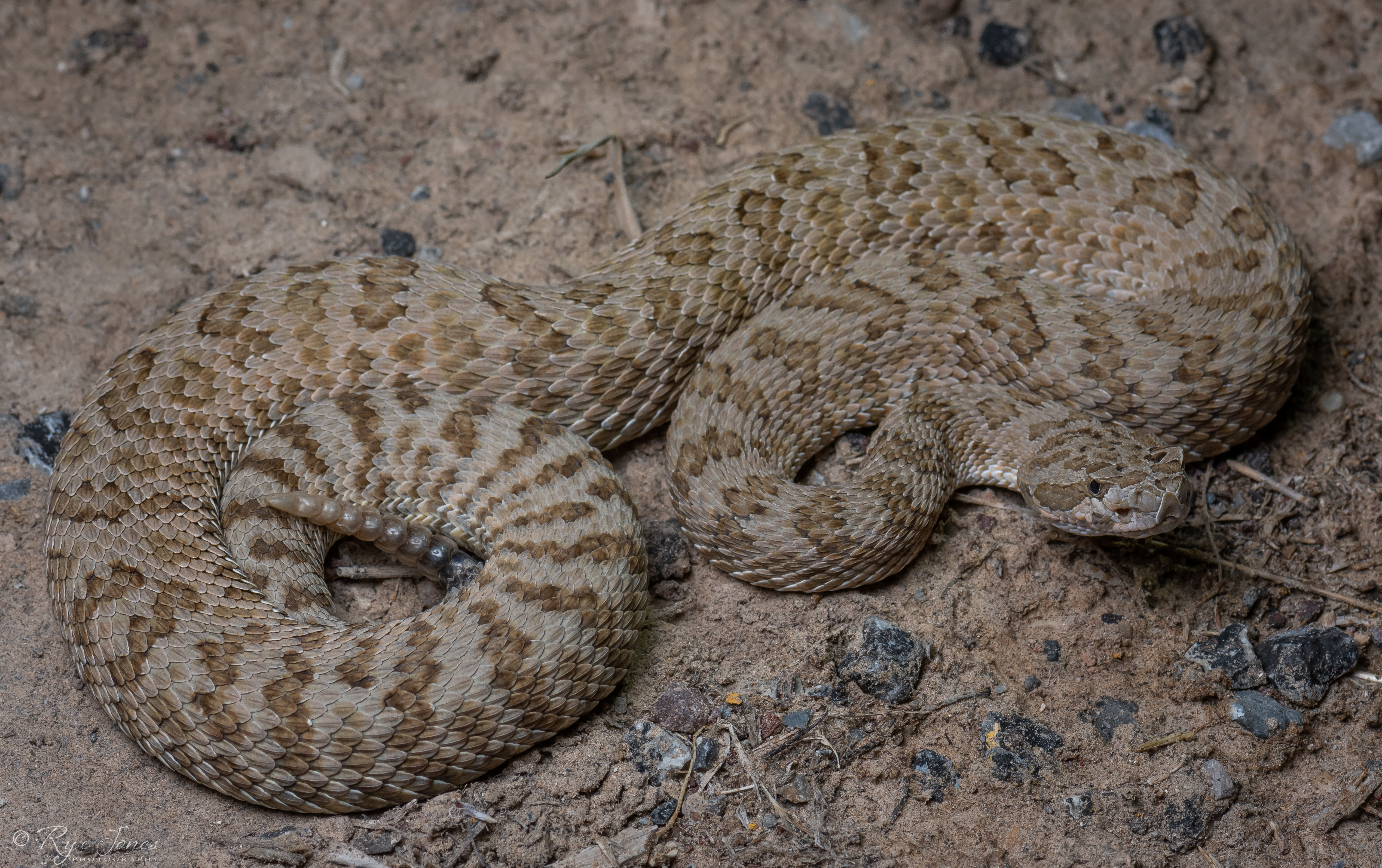
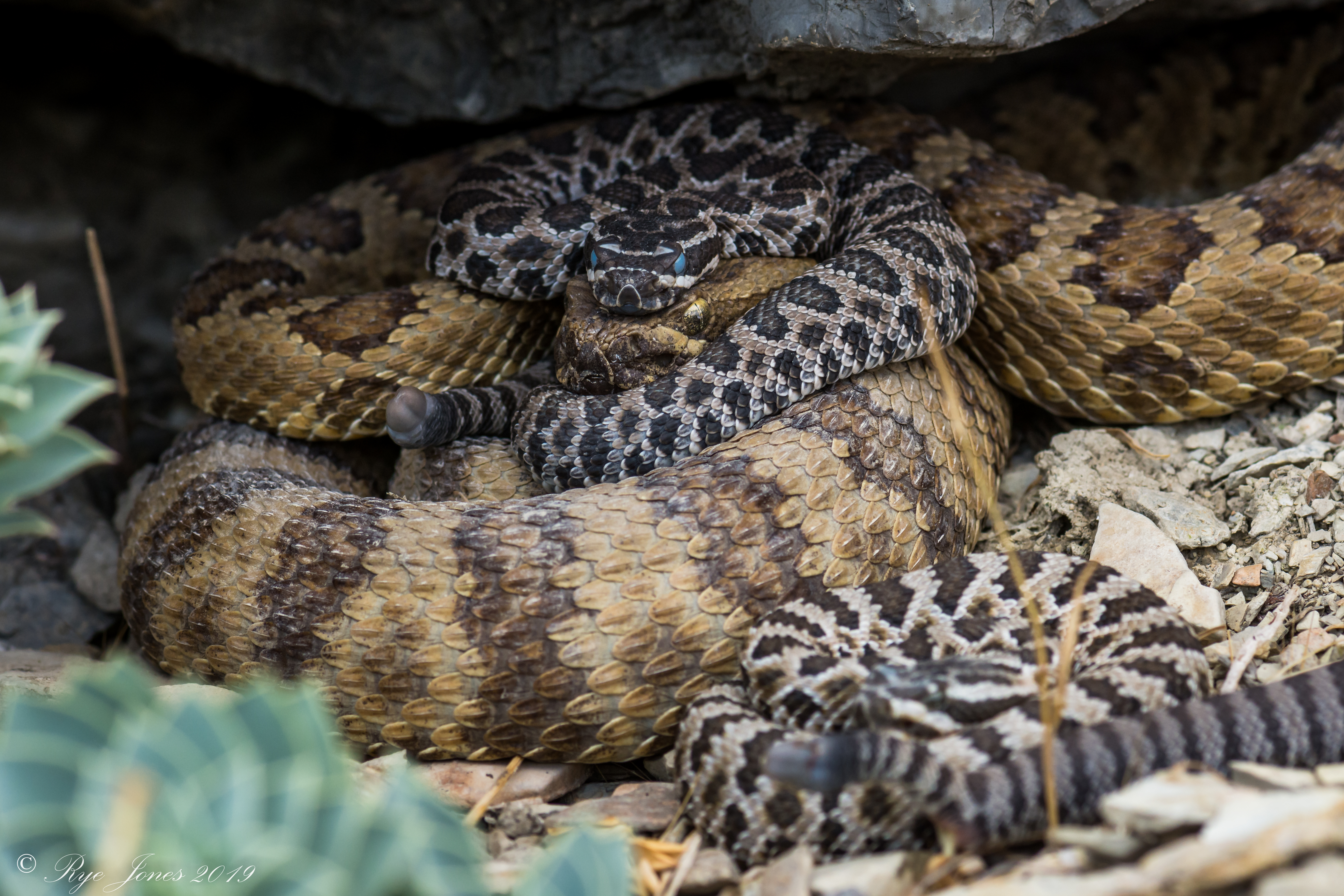
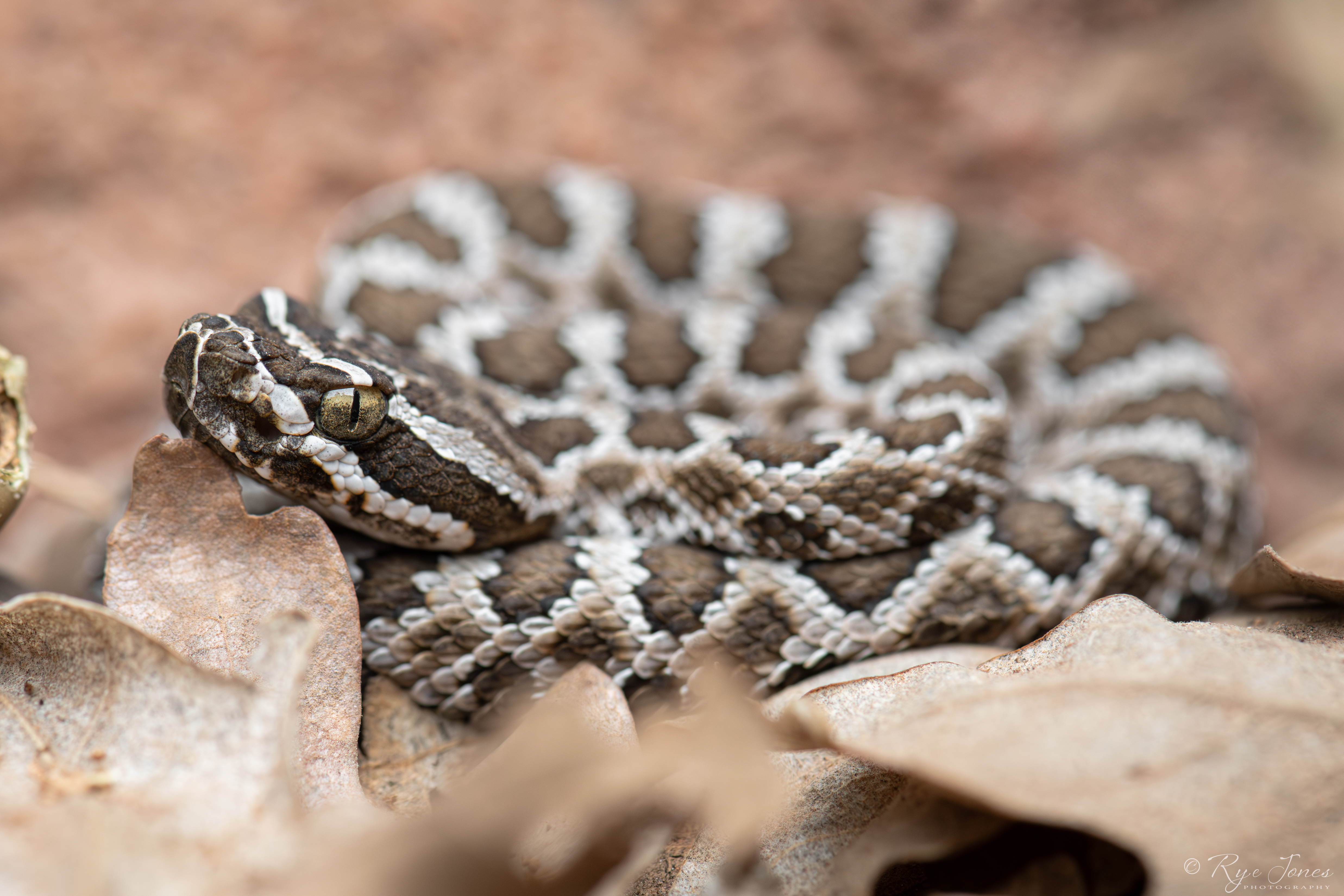
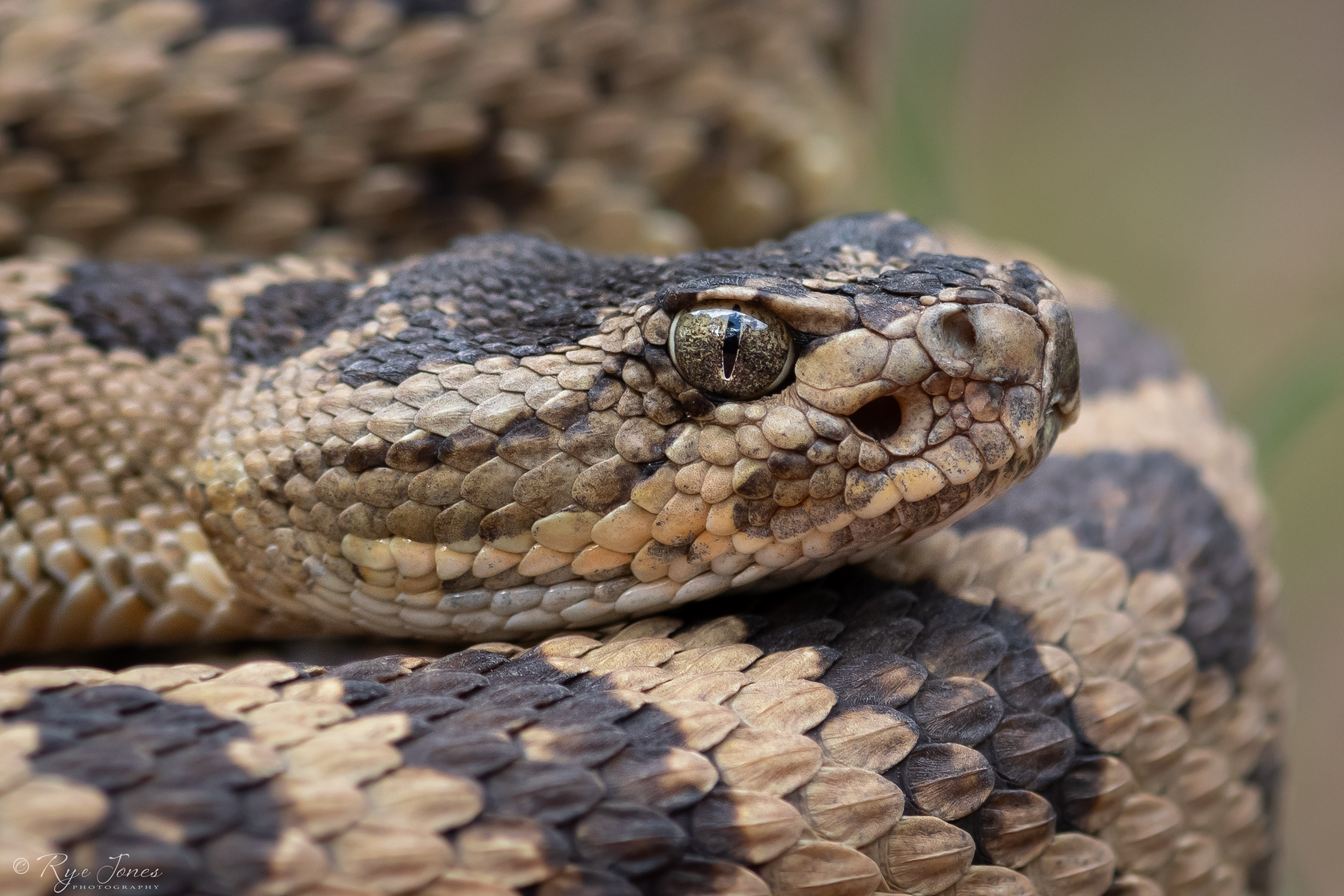
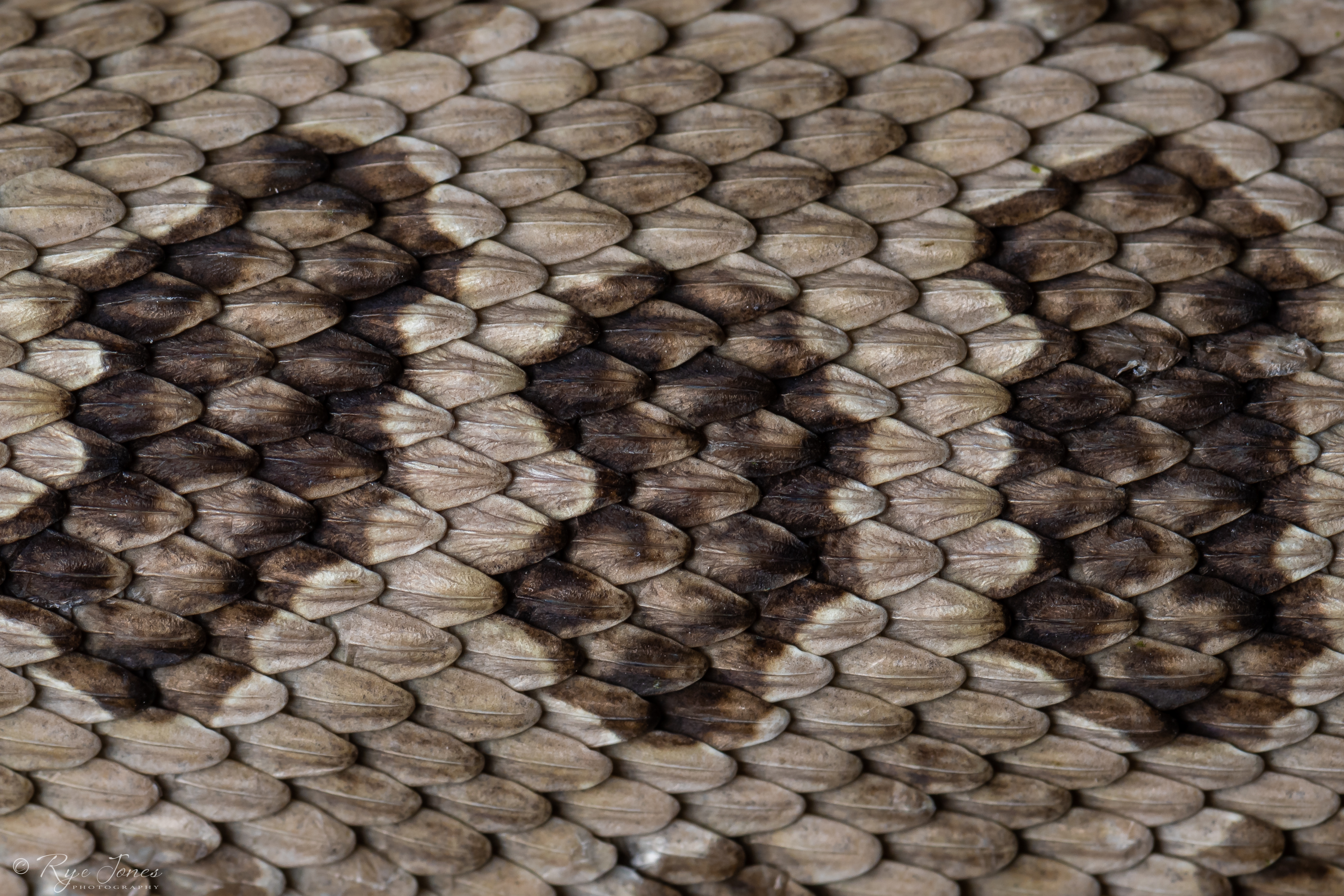
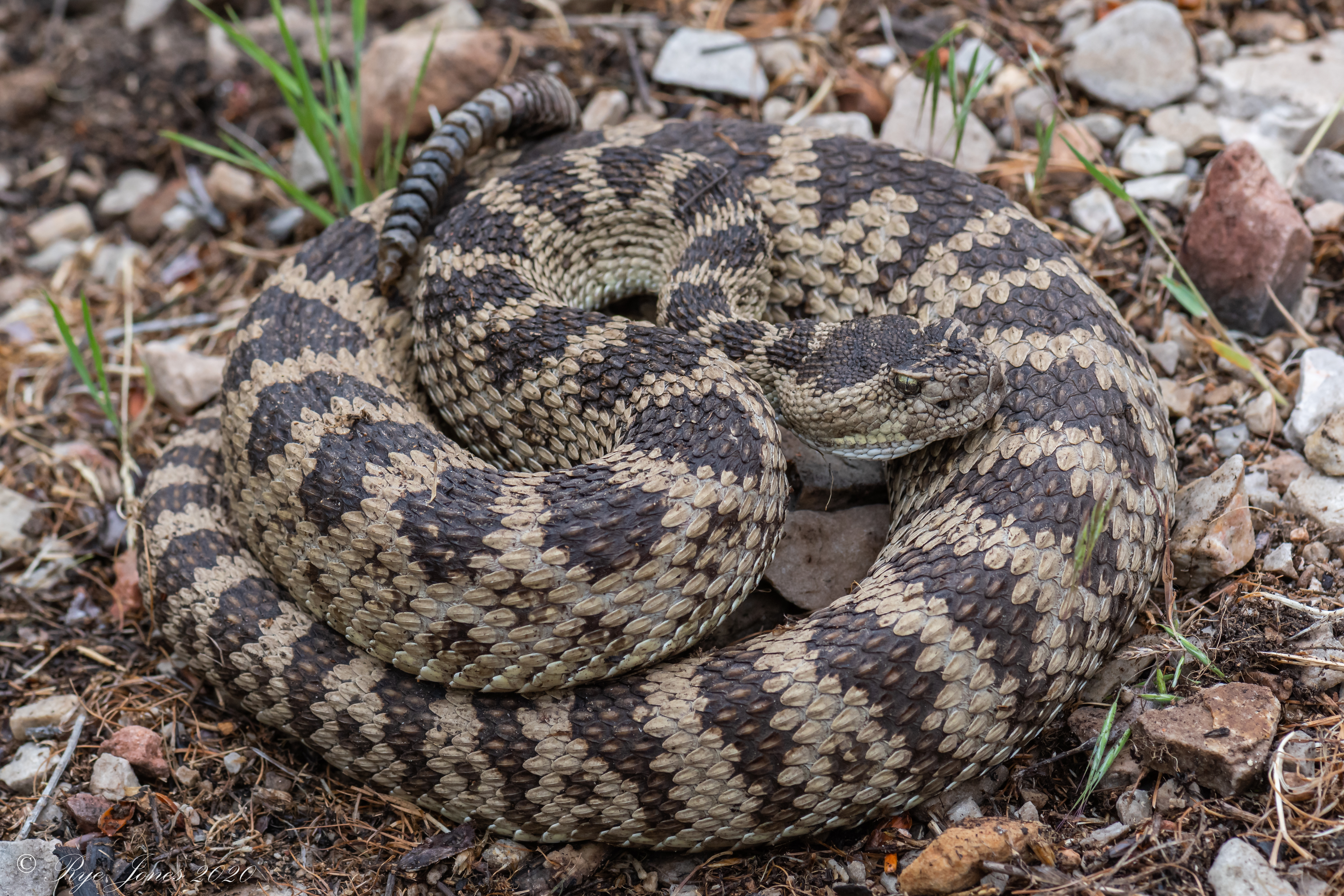
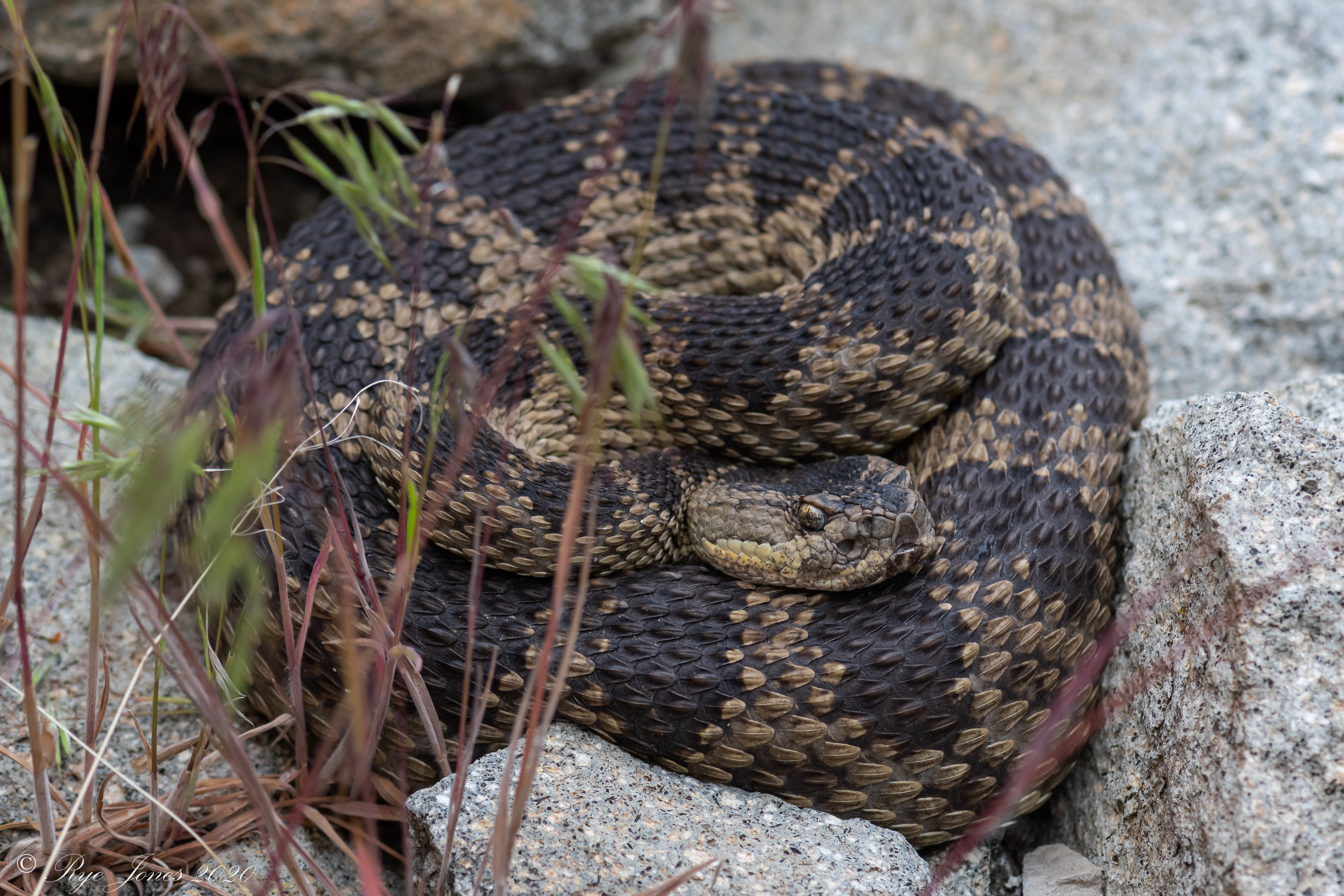

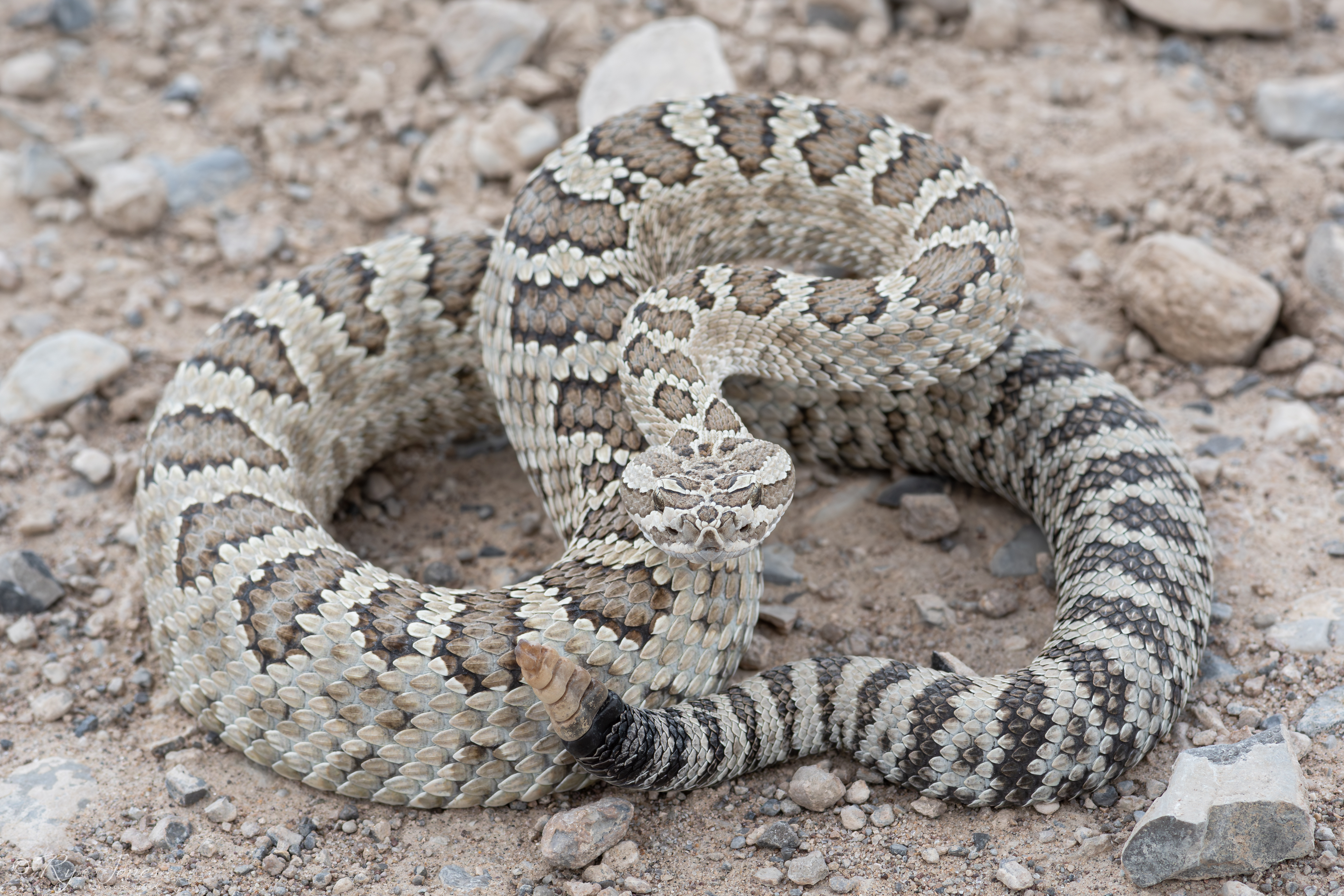
Description: The base color is brown, tan, yellow, gold, or gray with brown, tan, or black blotches on the dorsal. The blotches can be solid colored or light in the center with a dark border. Lighter-colored blotching occurs down the sides. The head usually has a dark blotch on top. A light-colored bar passes from the rear of the jaw through and between the eyes. Juveniles have a white base color with a bold pattern. The scales are keeled. This is Utah’s most commonly encountered rattlesnake.
Size: A medium-sized heavy-bodied snake averaging around 3 feet in length.
Venom: This snake produces a moderately toxic venom that consists primarily of hemotoxins. Medical treatment should be sought if a bite occurs.
Range and Habitat: This snake occurs throughout the western half of the state. It is the only rattlesnake species in the region north of Washington County and west of the Wasatch Plateau. It inhabits Great Basin desertscrub, arid and semiarid foothills, semidesert shrublands, rocky canyons, and pinyon-juniper woodlands. Although more commonly encountered at elevations lower than 7,000 feet, this snake has been recorded near 10,000 feet in Utah.
Similar Species: The other rattlesnakes in Utah can be similar in color and pattern. This species overlaps in range with the Southwestern Speckled Rattlesnake, Mojave Desert Sidewinder, and Mojave Rattlesnake in Southern Washington County.

 The Reptiles and Amphibians of Utah