Hopi Rattlesnake
Crotalus viridis “nuntius”
Venomous
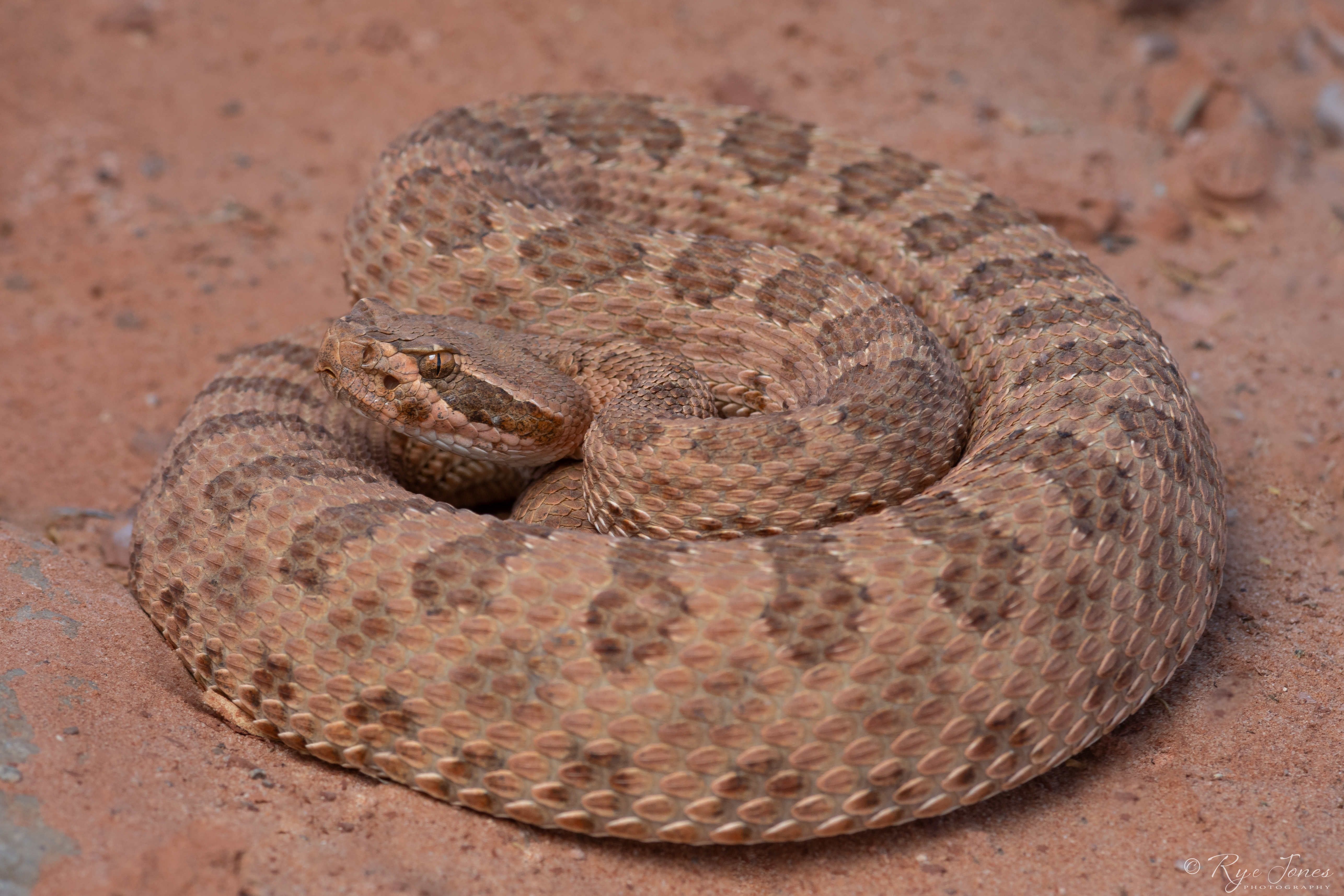
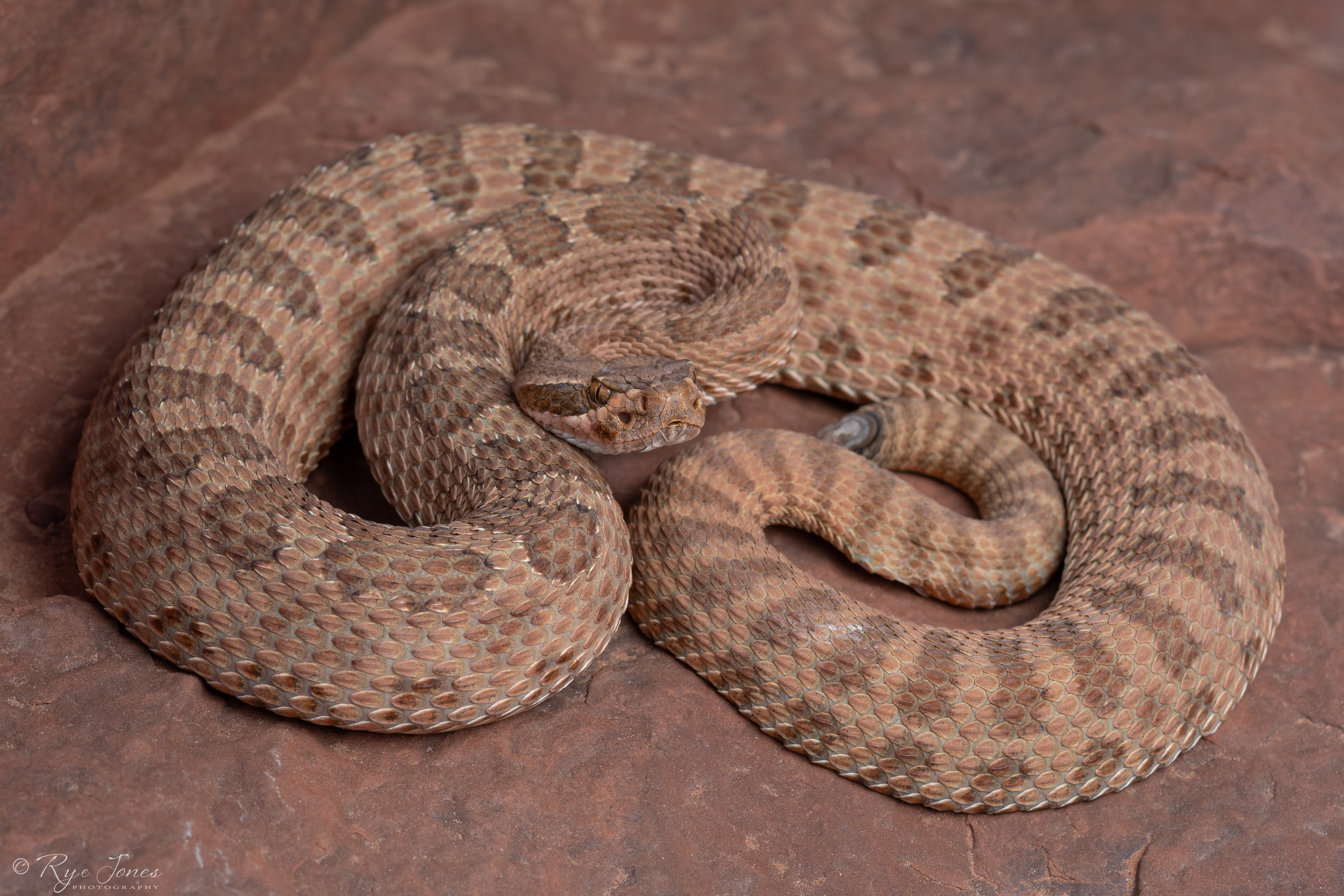
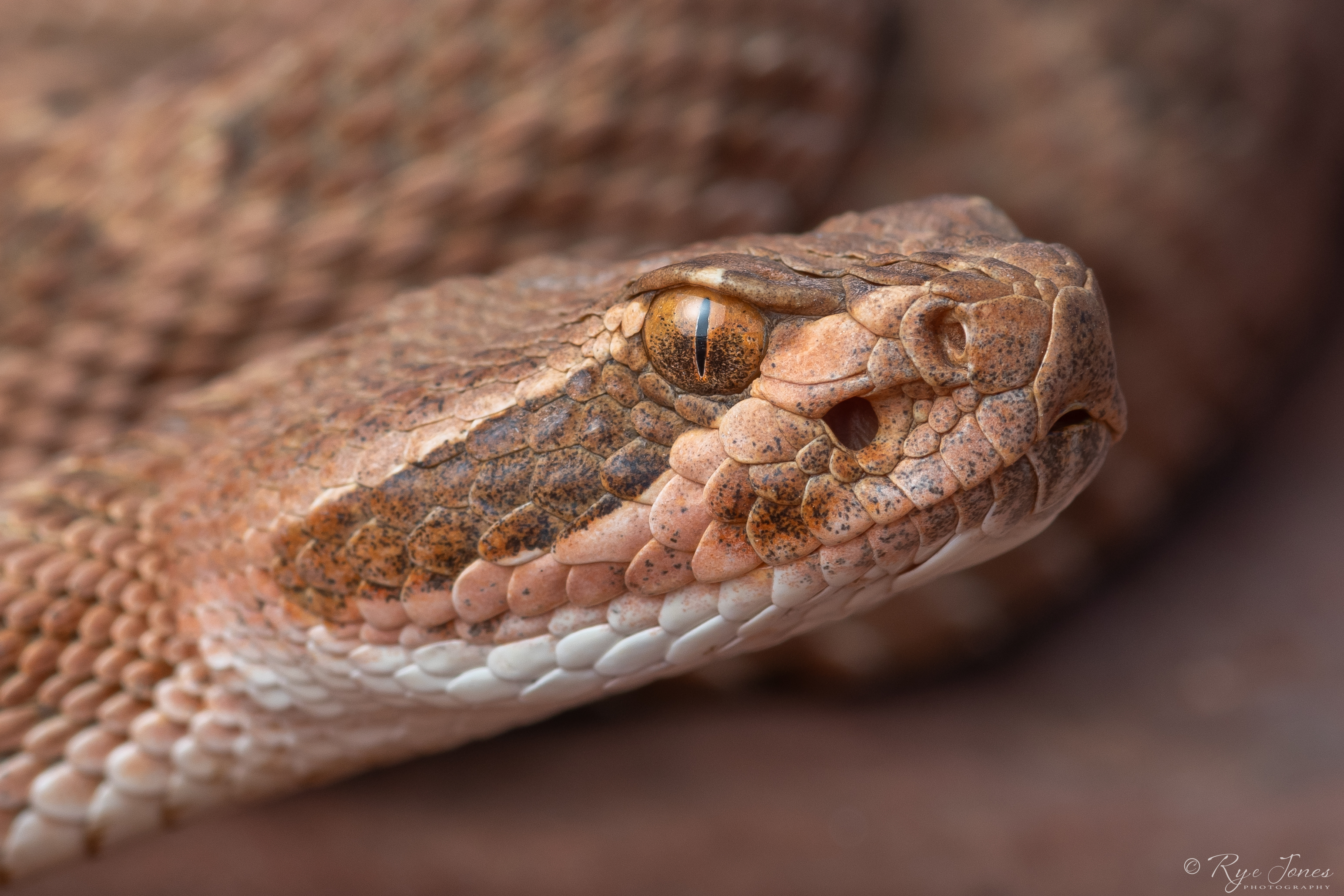
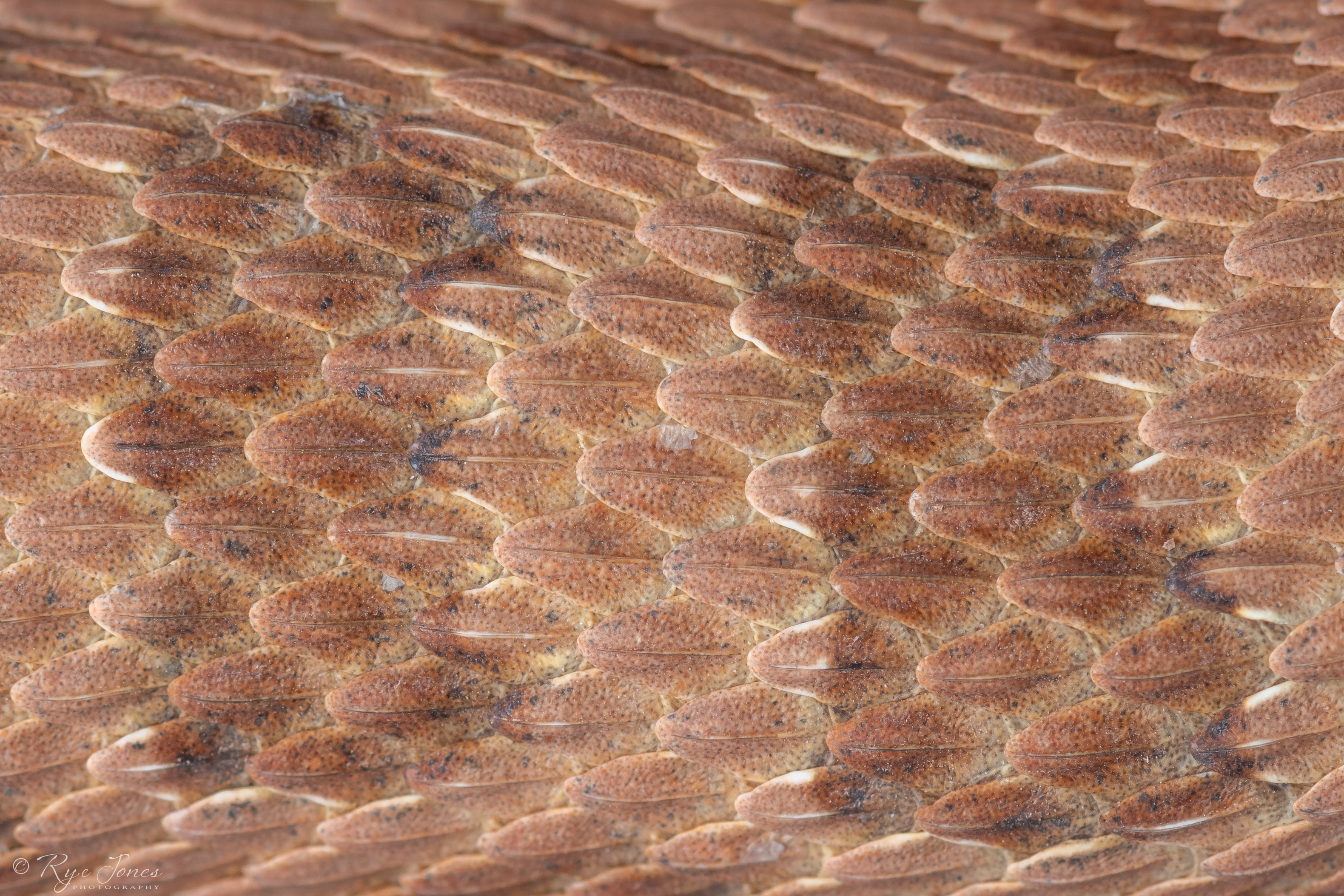
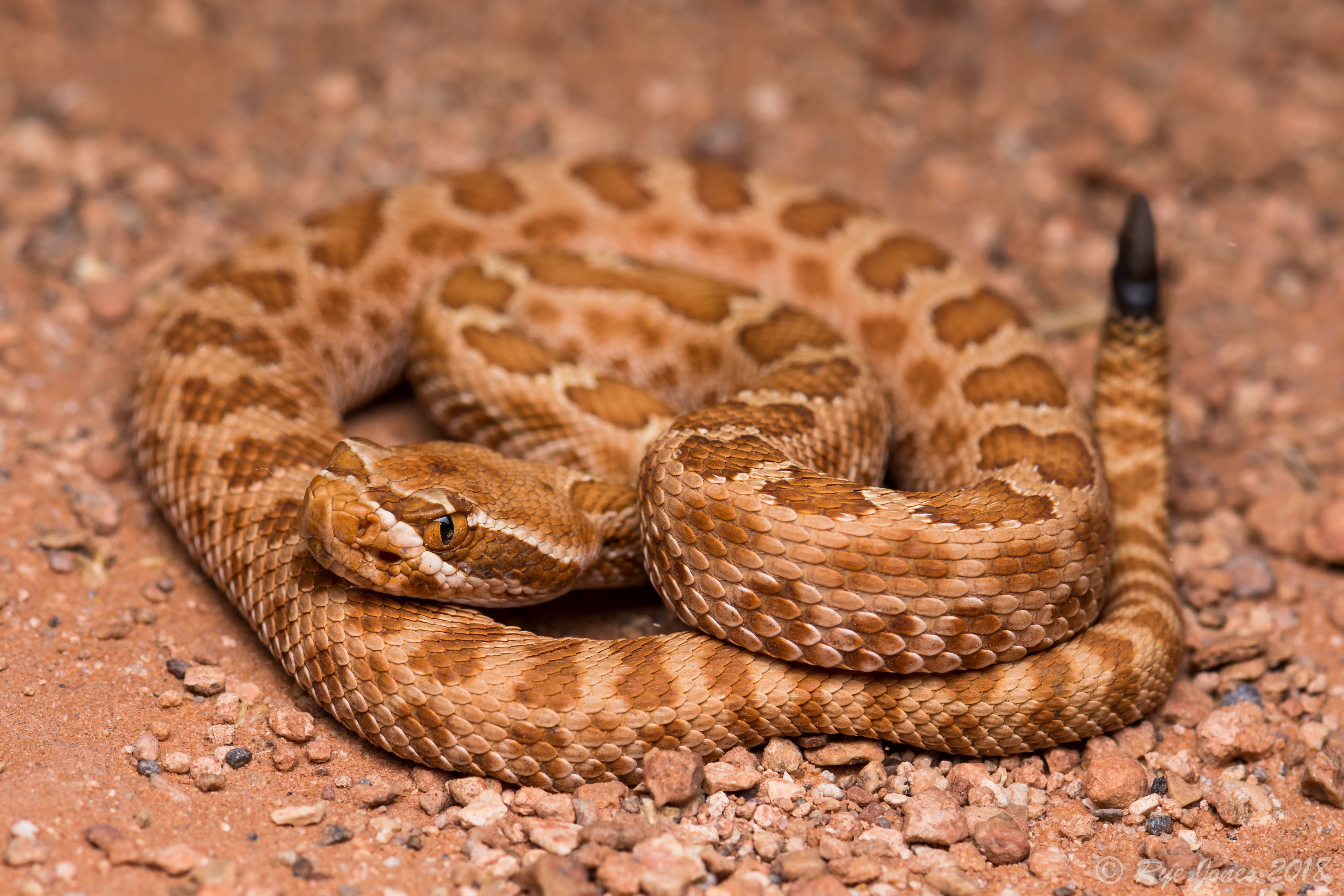
Description: Tan or brown base color with red, pink, or orange tints. Blotching extends down the dorsal and becomes more banded toward the tail. Blotches are variable in shape, including round, barred, hour-glass, or paired spots. Blotching is reddish-brown, bordered with white scales. The blotching and white border can be faded. One to two rows of faded lateral blotching. A dark bar passes between and through the eyes to the back of the jaw. This bar is outlined in white or cream, giving this snake a “masked” look. The scales are keeled.
Once considered a separate subspecies, the Hopi Rattlesnake is now just considered a dwarf variant of the Prairie Rattlesnake. It is still commonly referred to as nuntius by many when encountering these snakes within their range.
Size: A small heavy-bodied snake averaging around 2 feet in length.
Venom: This snake produces a moderately toxic venom that consists primarily of hemotoxins. Medical treatment should be sought if a bite occurs.
Range and Habitat: This snake occurs on the Colorado Plateau in southern San Juan County. It inhabits arid and semiarid plains and grasslands. It can be found below 6,000 feet in elevation.
Similar Species: The other rattlesnakes in Utah can be similar in color and pattern. This species overlaps in range with the Great Basin Rattlesnake (abyssus) and the Midget Faded Rattlesnake in the area of Lake Powell. These species can be very difficult to tell apart due to suspected interbreeding between them in this area.

 The Reptiles and Amphibians of Utah