Utah Milk Snake
Lampropeltis gentilis “taylori”
Non-venomous – Harmless
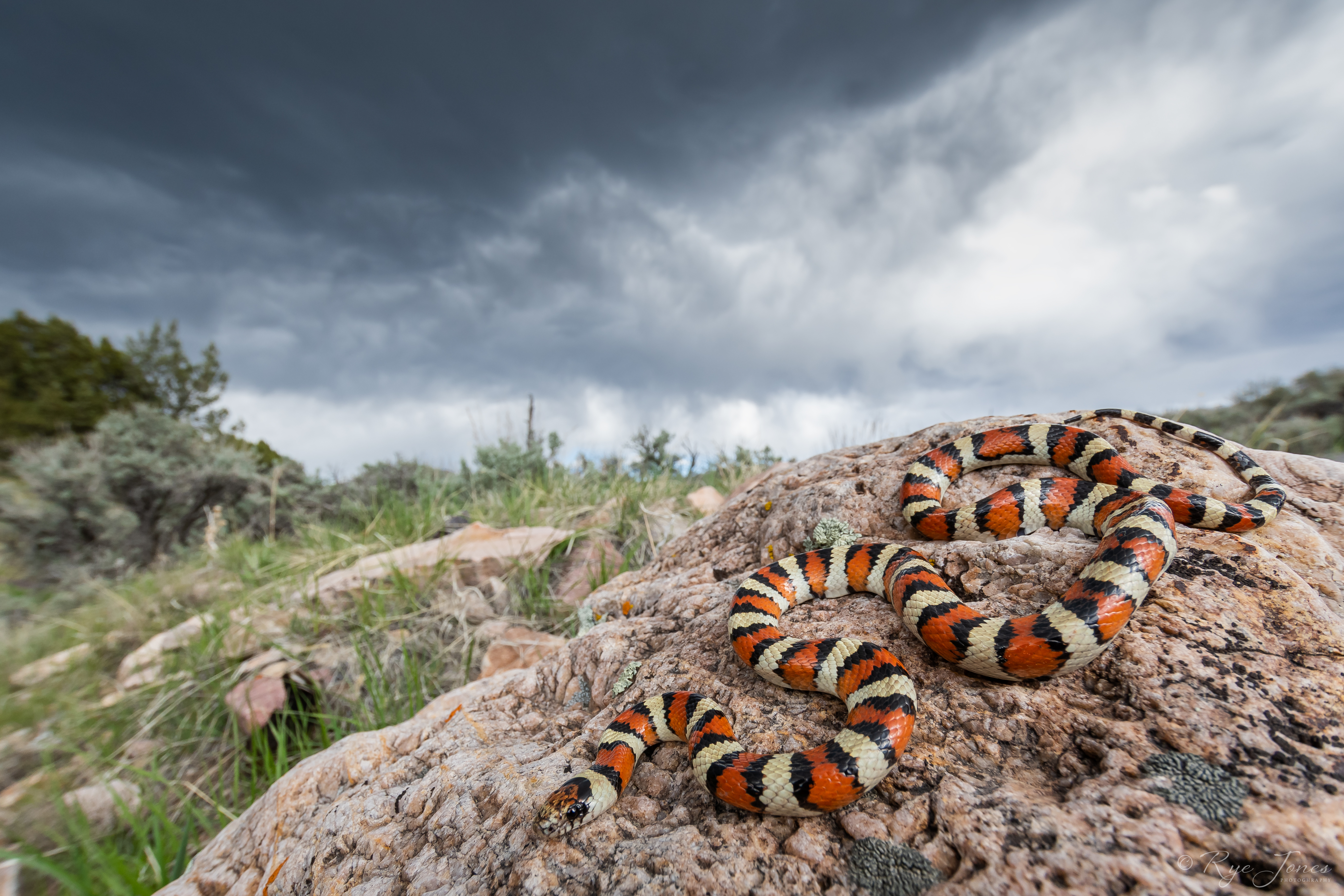
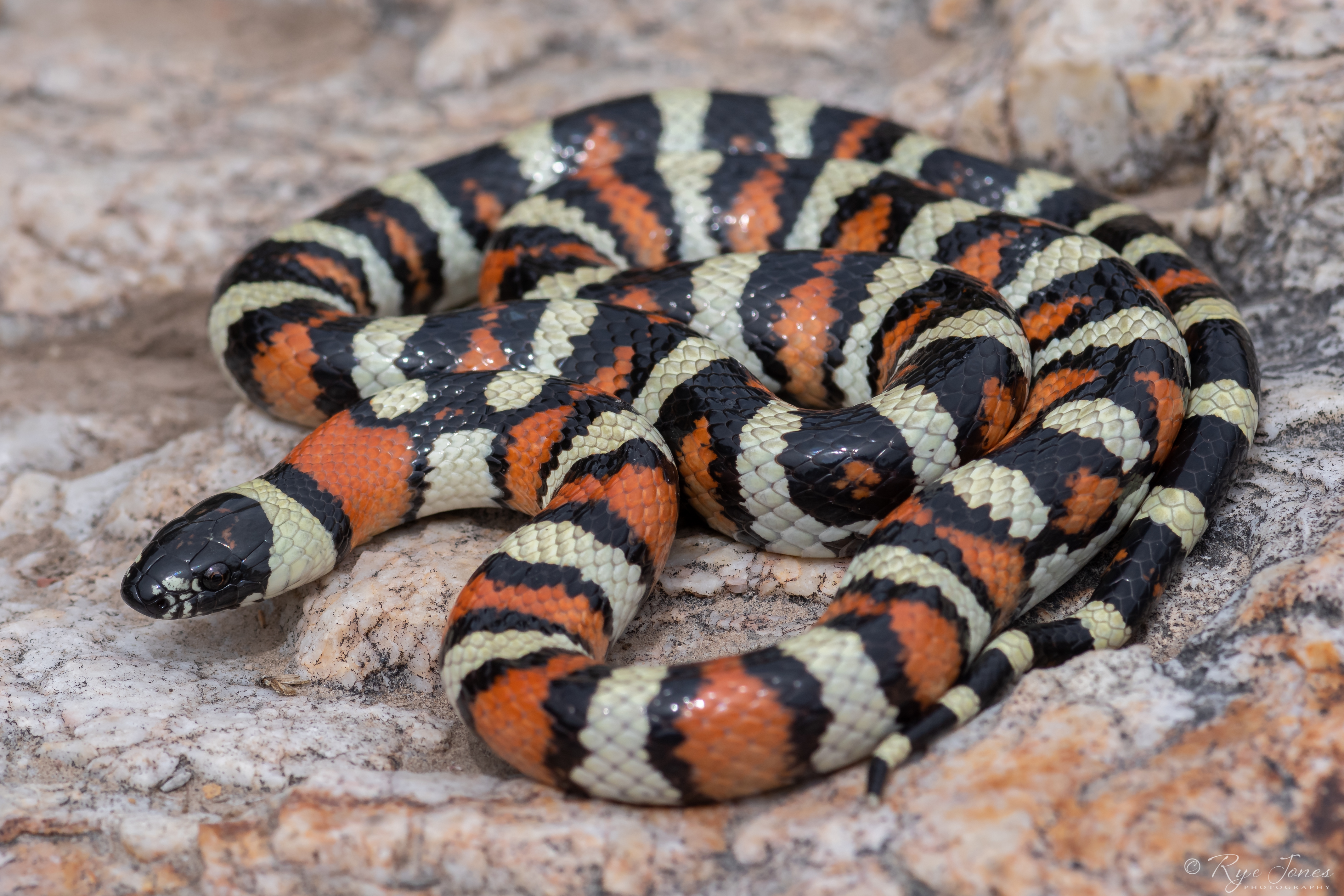

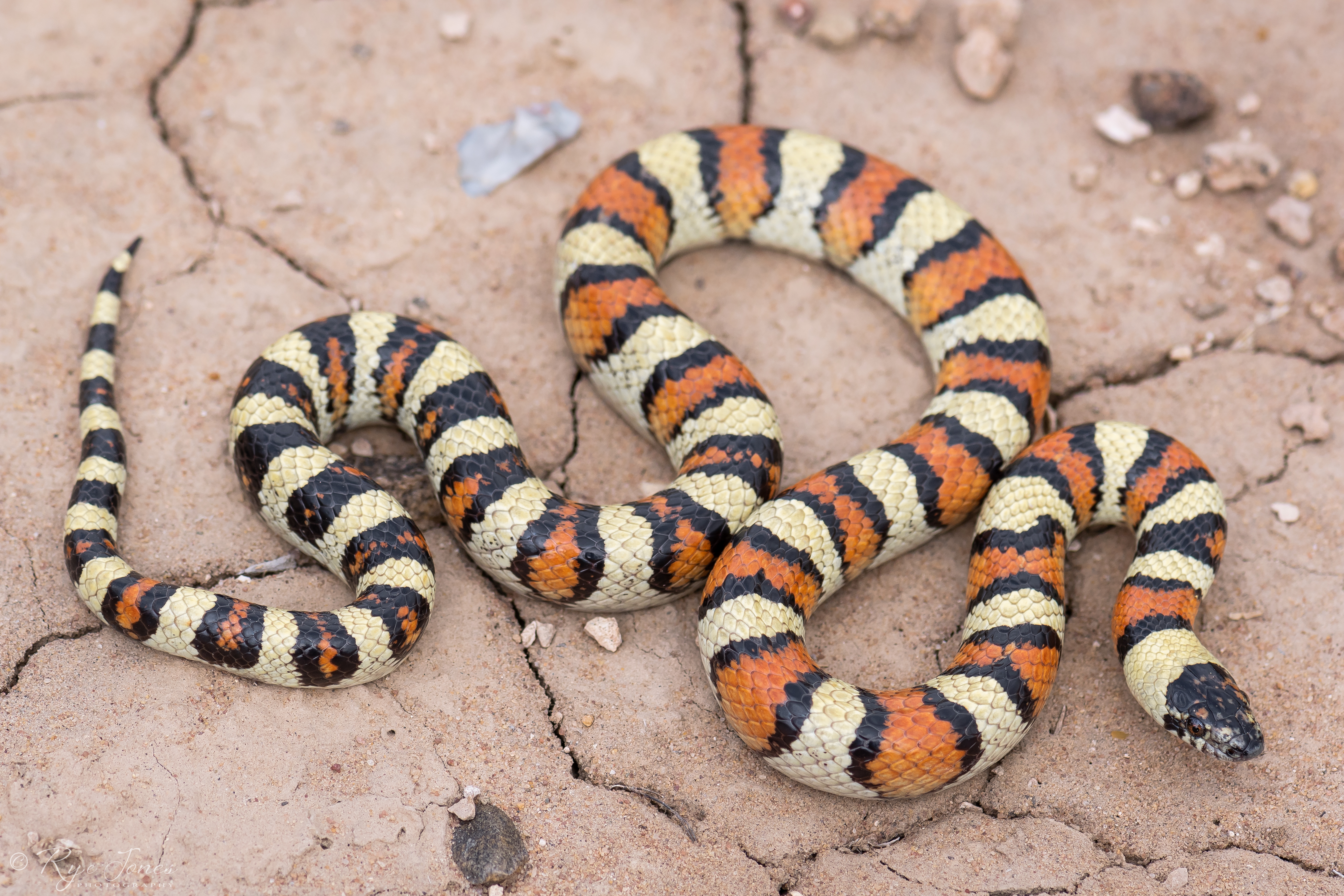

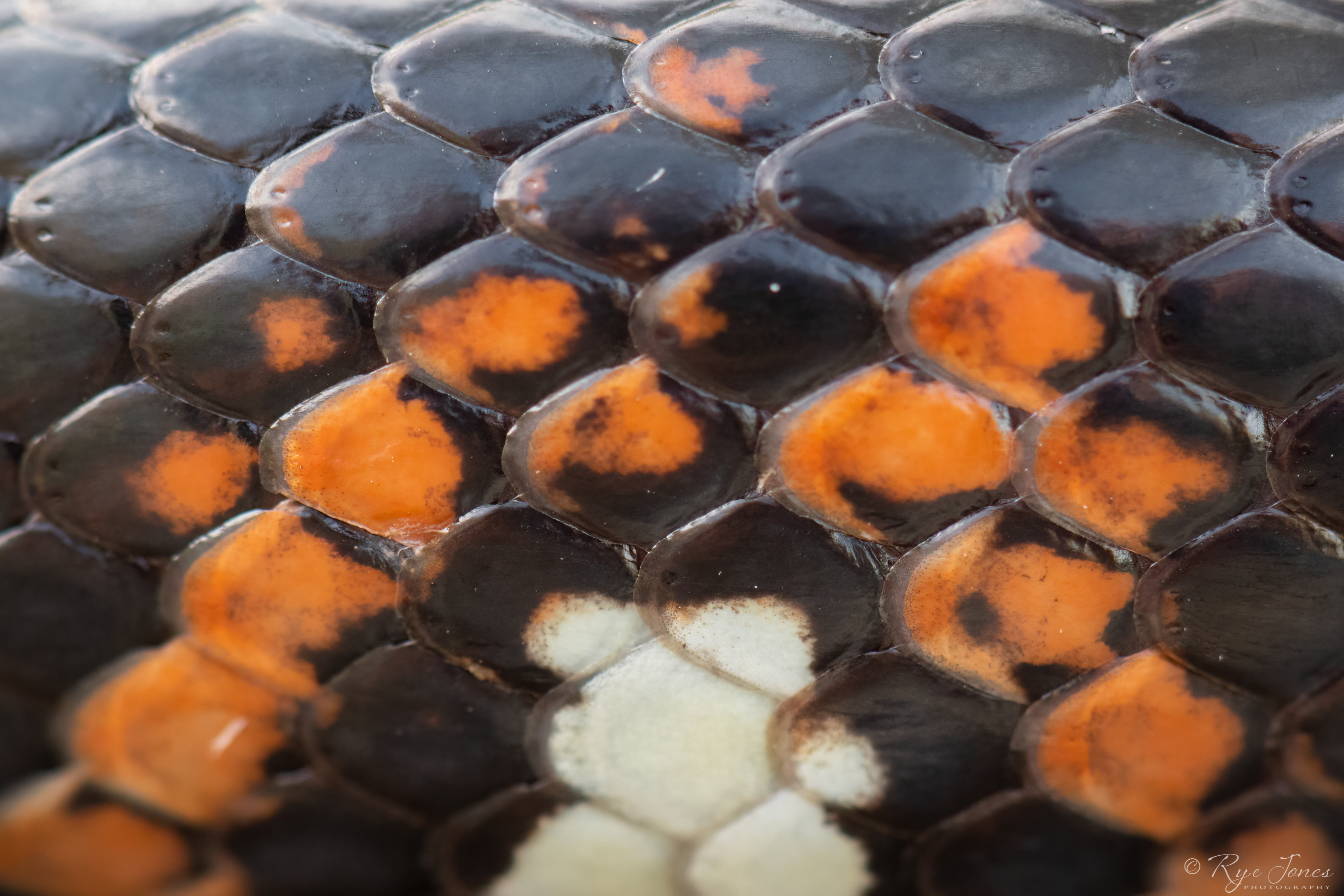
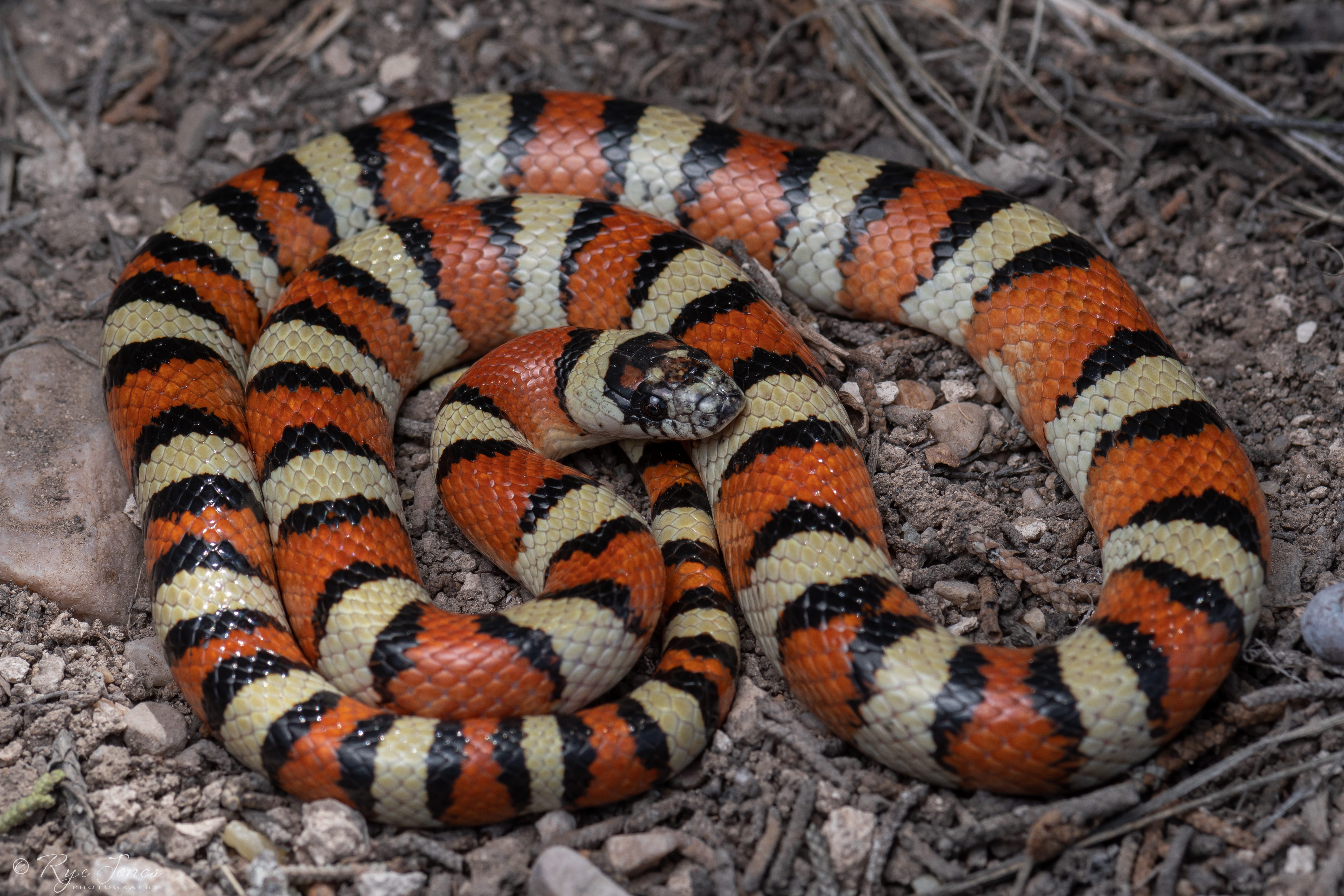

Description: A banded snake with alternating red, black, and white bands. Sometimes the red is replaced by orange, and the white is replaced by yellow or cream. The bands and color extend around the ventral of the snake. This snake has smooth scales. It is primarily fossorial in nature and spends the majority of its life underground.
Previously known as Lampropeltis triangulum taylori, this snake is still commonly referred to as “taylori” in the field herping community. This snake is often mistaken for the venomous coral snake, which does not occur anywhere within the state.
Size: A medium-sized snake averaging around 2 feet in length.
Range and Habitat: This snake occurs throughout much of the Colorado Plateau and west through north-central Utah. It possibly occurs as far west as Nevada. It inhabits a variety of habitats throughout the state, including semi-desert shrublands, pinyon-juniper woodlands, Great Basin desertscrub, and grasslands. It is most commonly present in areas of loose, sandy, or loamy soils. It occurs between 4,500 to 7,000 feet in elevation.
Similar Species: The white snout of the Utah Mountain Kingsnake is often used as a distinguishing characteristic; however, this is not always accurate, as Utah Milksnakes can also have a white or mottled snout. There is a slight difference in overall head shape, with the milksnake having less distinction between the neck and rear of the jaw and a more rounded snout. Additionally, Utah Mountain Kingsnakes generally have more than 43 white bands, whereas Utah Milksnakes have typically fewer than 38, but again, this is not always an accurate method of identification. Habitat, range, and behavior should also be considered when trying to identify these two snakes.
The Long-nosed Snake is similar in color and pattern but has a more speckled look and a patternless ventral. The California Kingsnake lacks red bands. The Variable Ground Snake lacks white bands.
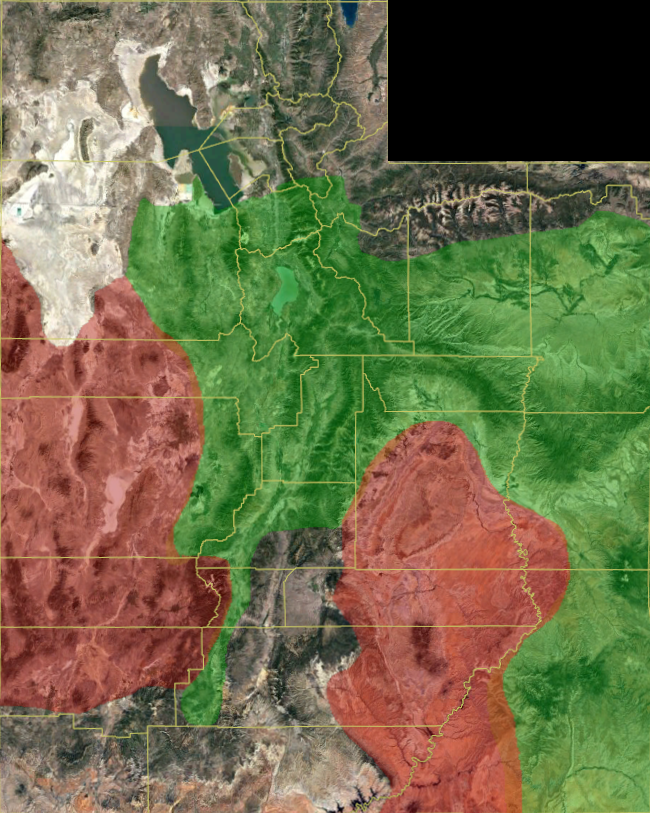
Possible Range
Known Range
 The Reptiles and Amphibians of Utah