Utah Mountain Kingsnake
Lampropeltis pyromelana infralabialis
Non-venomous – Harmless
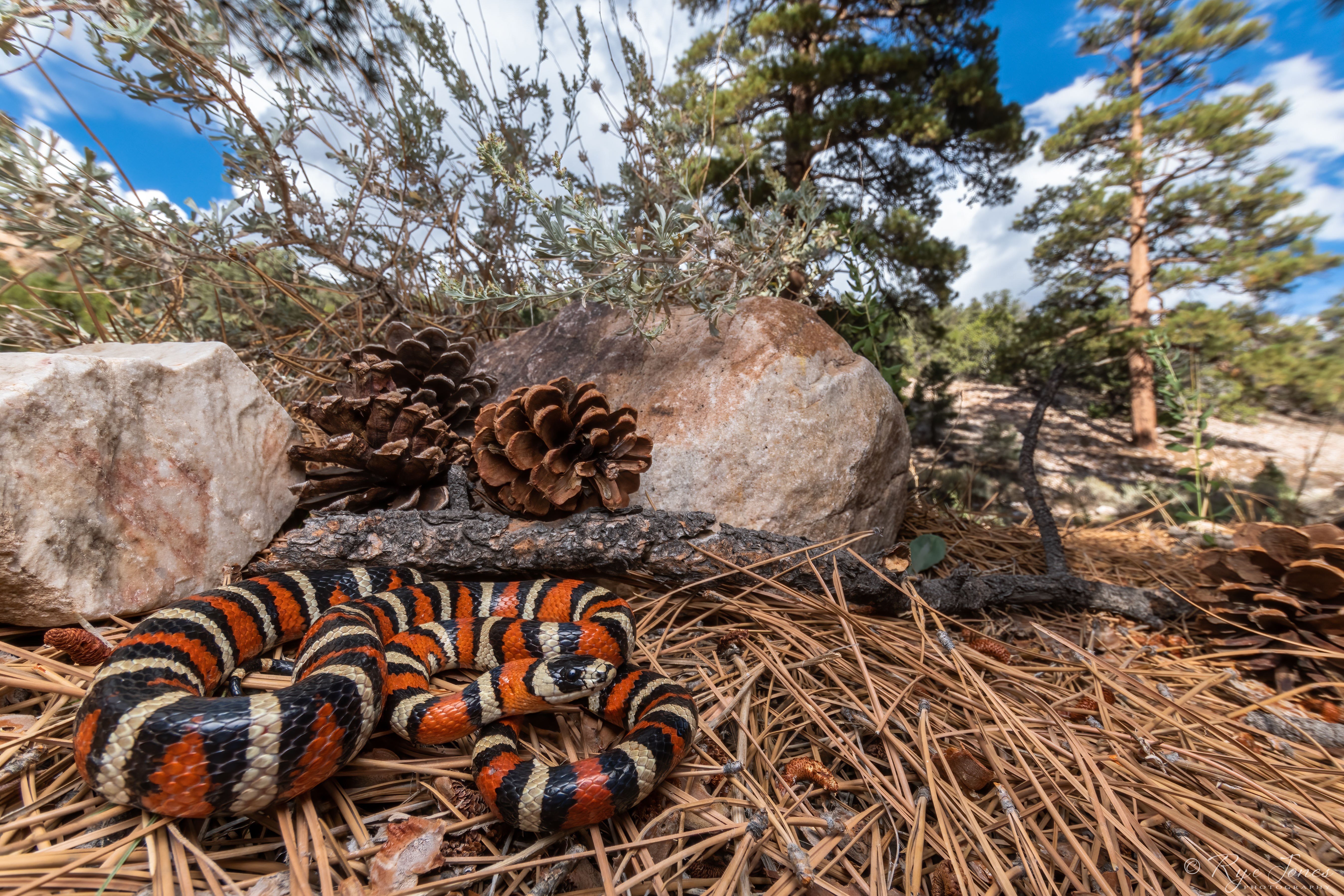
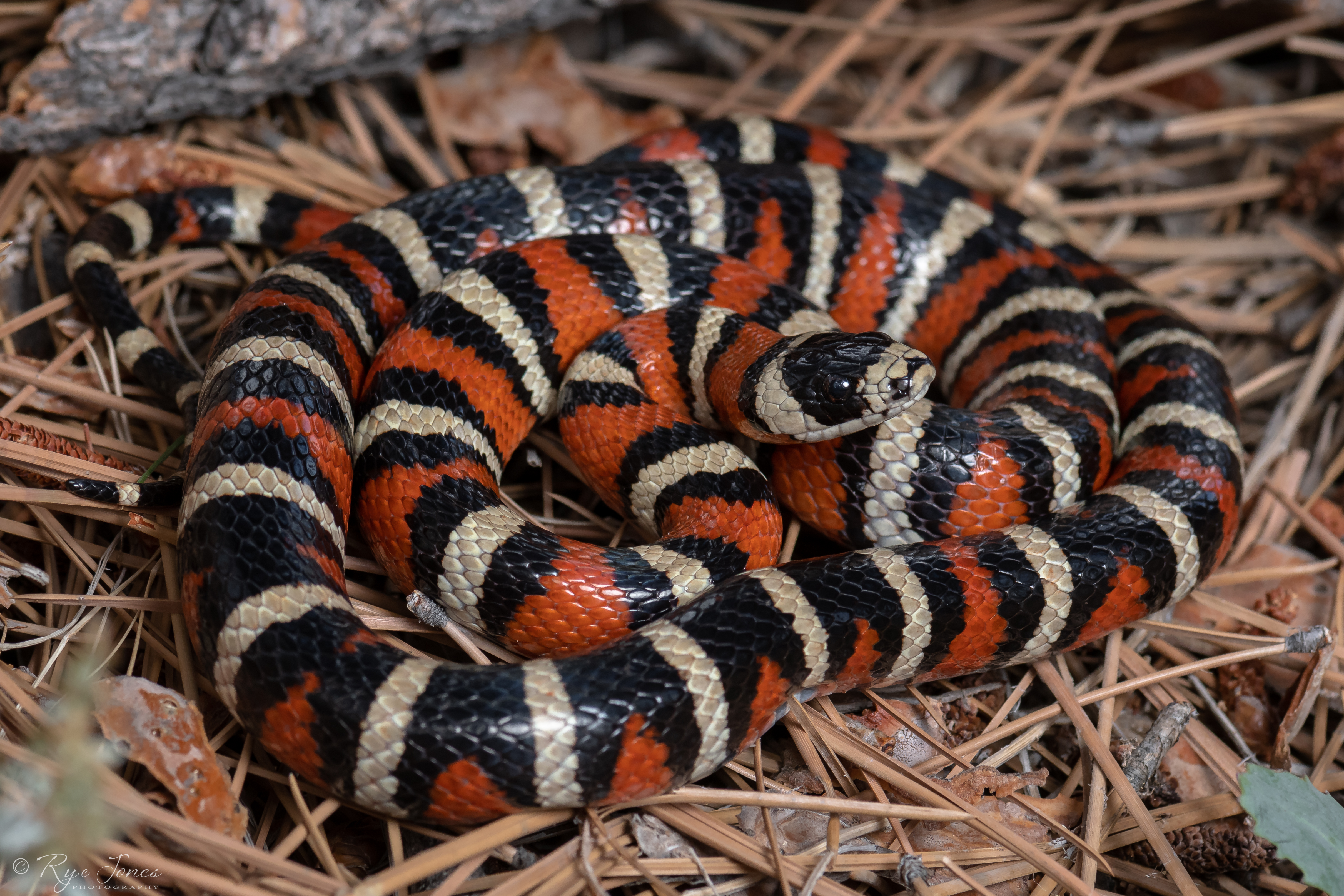
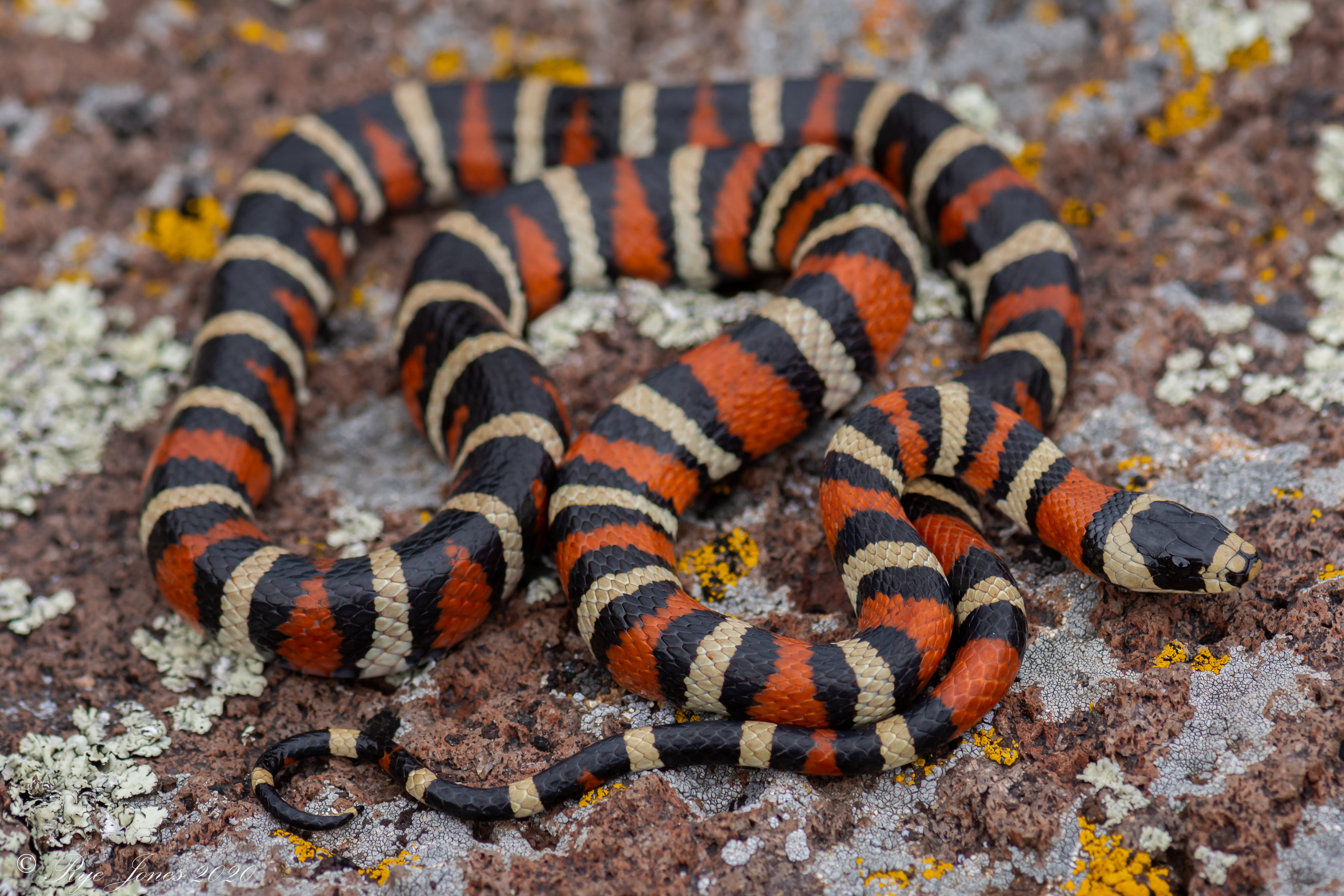
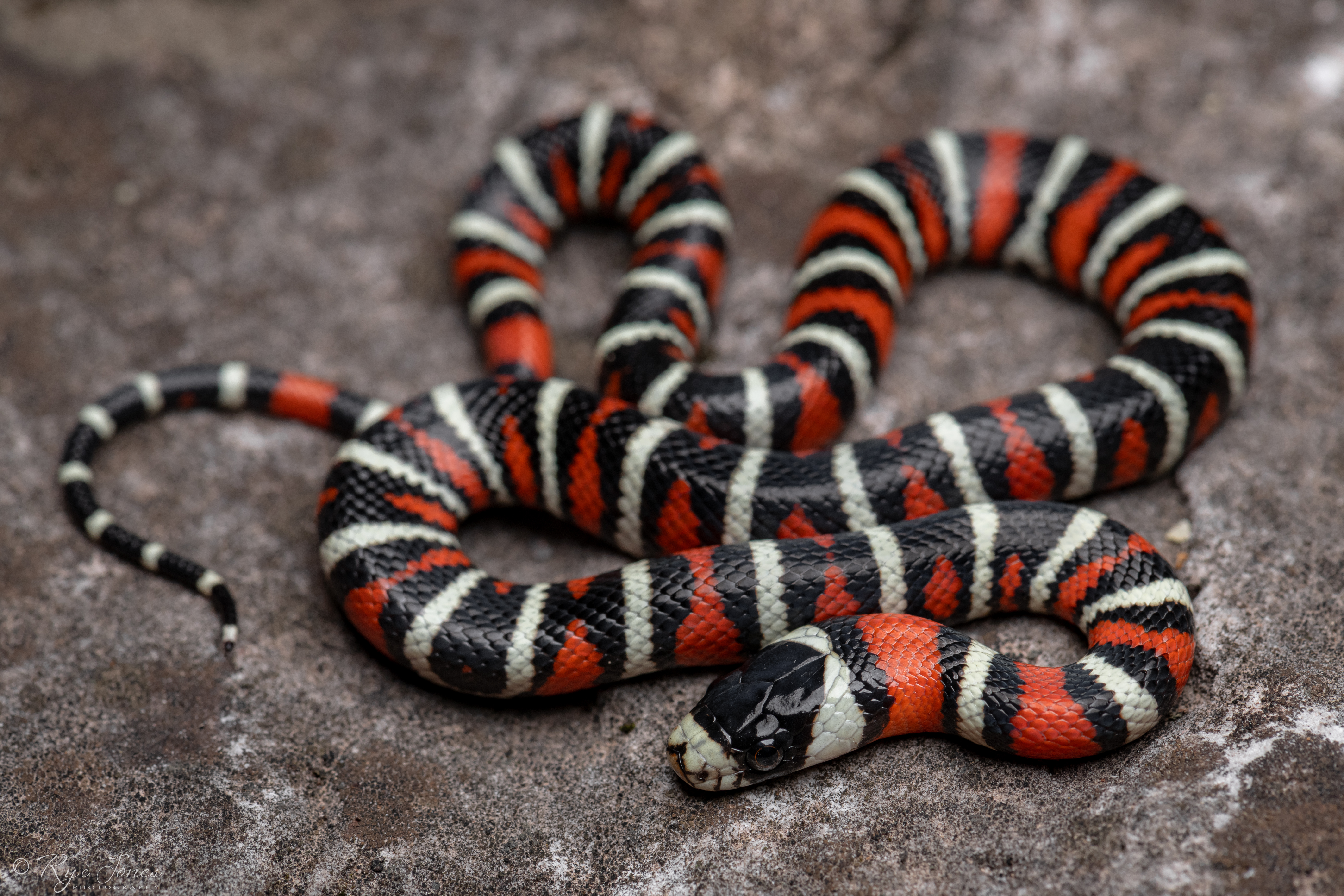
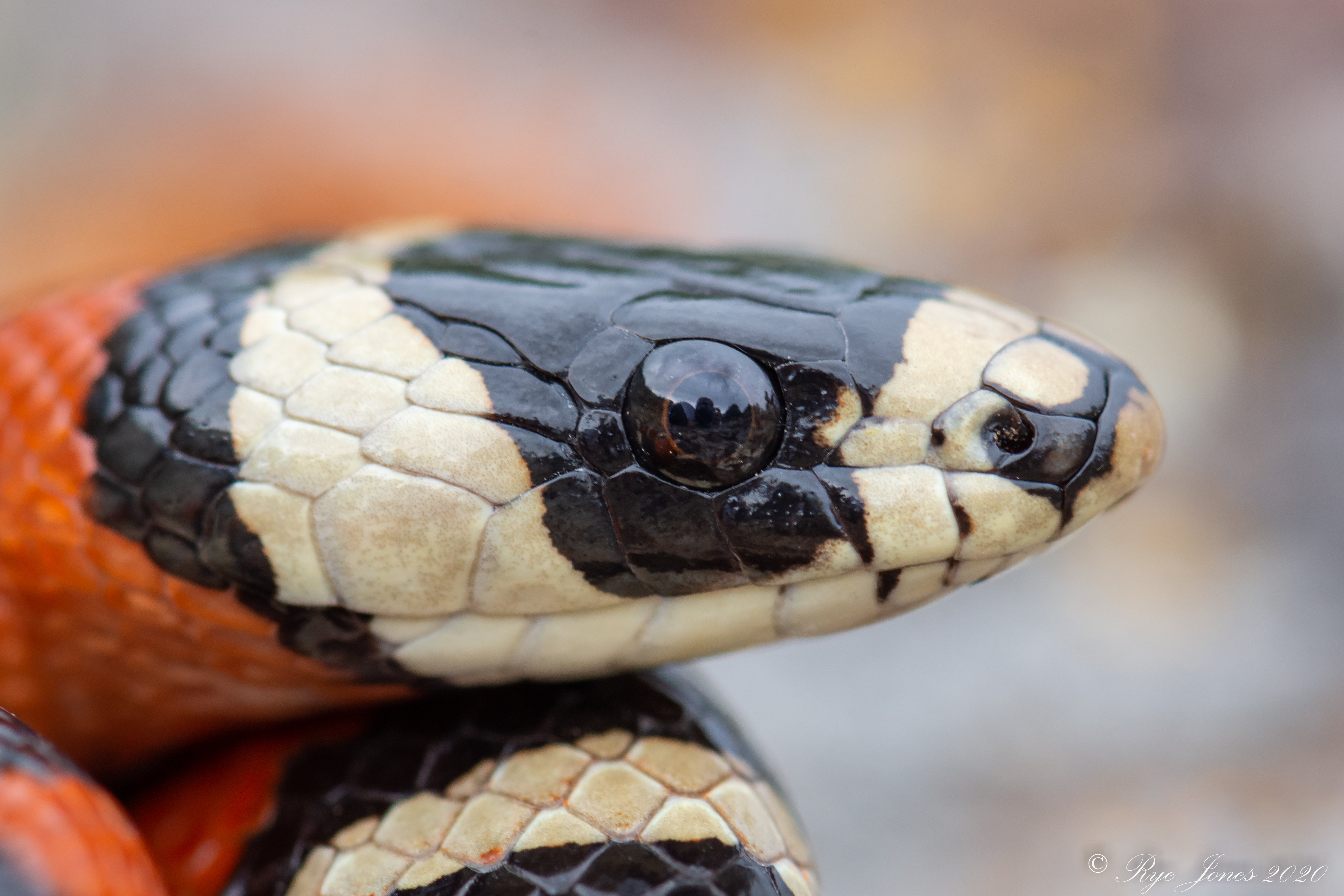
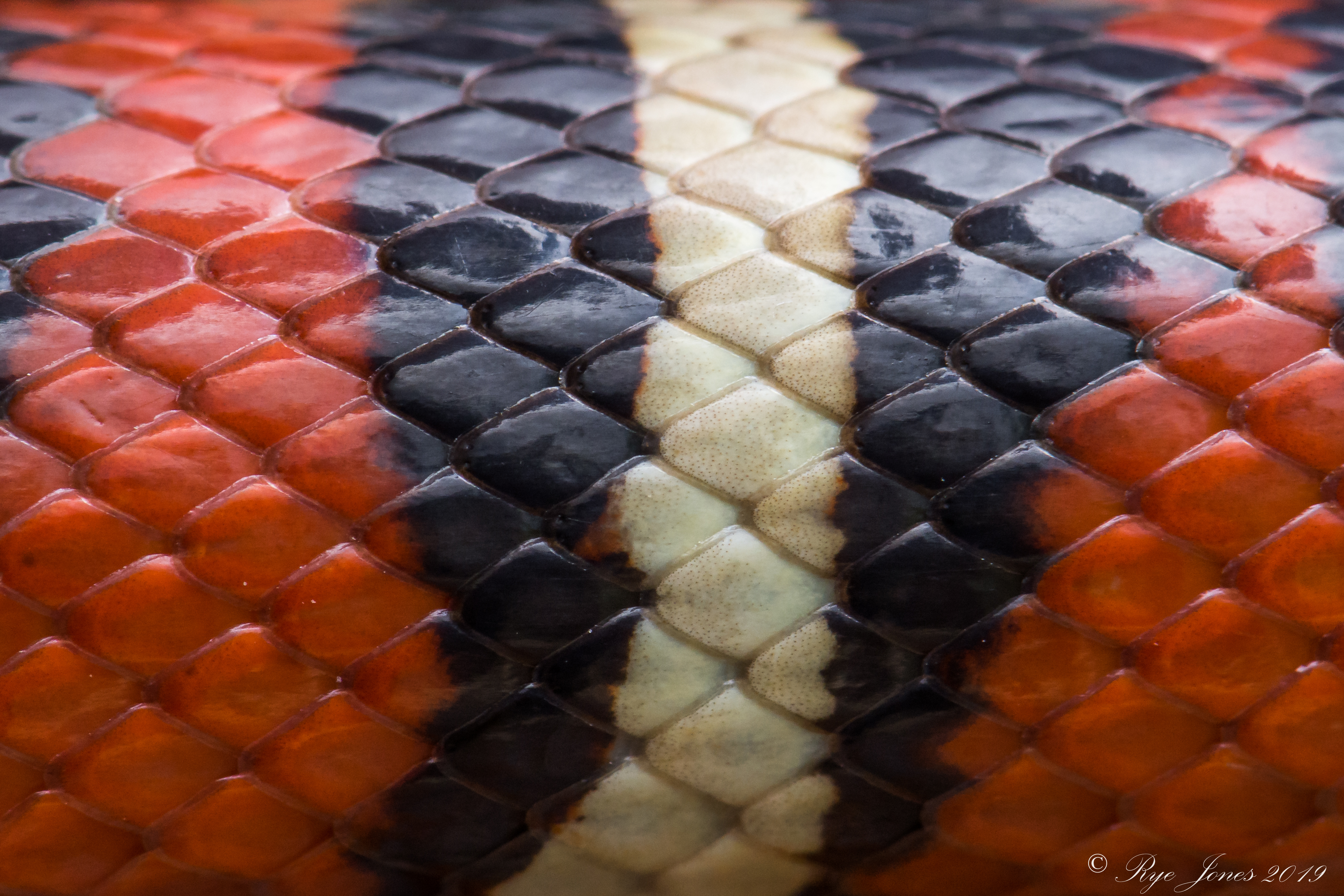
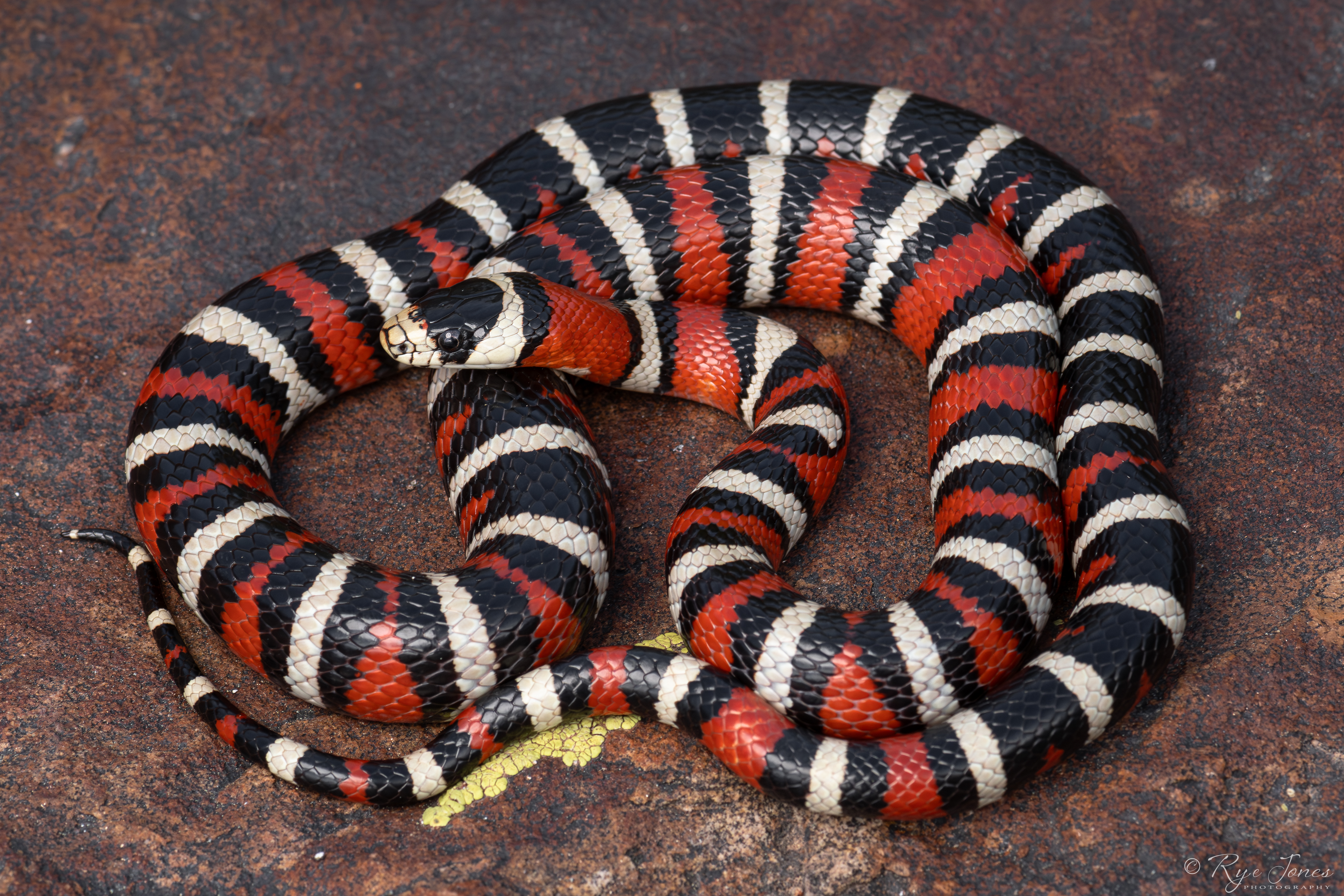
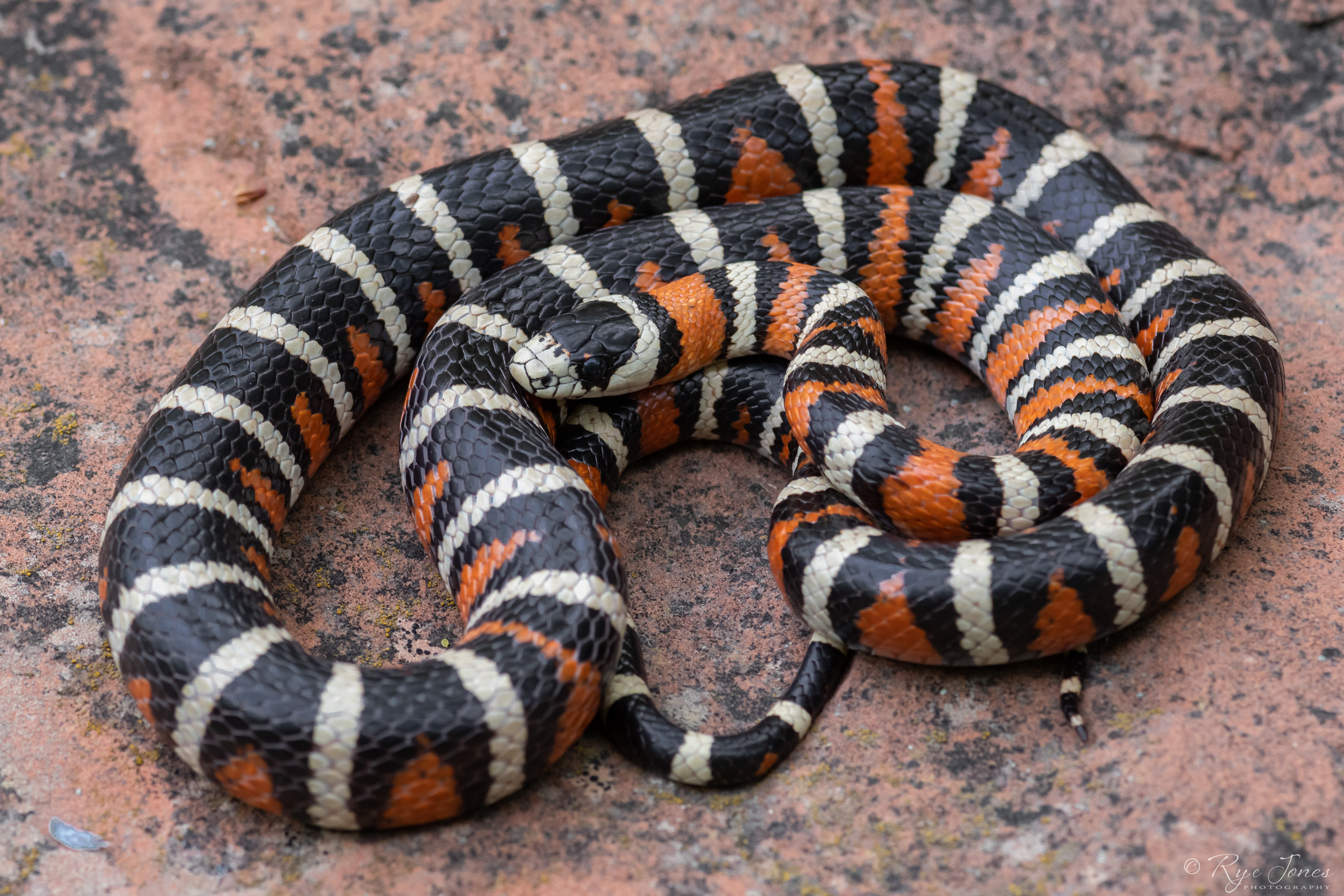
Description: A banded snake with alternating red, black, and white bands. The bands and color extend around the ventral of the snake. The black bands often connect on the dorsal, creating crossovers. They have smooth scales and typically have a white snout. The head is wider than the neck. They are primarily terrestrial in nature.
This snake is often mistaken for the venomous coral snake, which does not occur anywhere within the state.
Size: A medium-sized snake averaging 2 to 3 feet in length.
Range and Habitat: This snake occurs throughout most of the mountain ranges in the southwestern quadrant of the state. It is commonly associated with riparian montane canyons but can be found far from water in semi-arid foothills and woodlands. Associated plant life includes juniper, pinyon pine, sagebrush, gambel oak, maple, and ponderosa pine. This snake prefers rocky areas. It can be found from about 5,500 feet to 7,500 feet in elevation.
Similar Species: The white snout of the Utah Mountain Kingsnake is often used as a distinguishing characteristic; however, this is not always accurate, as Utah Milksnakes can also have a white or mottled snout. There is a slight difference in overall head shape, with the Utah Mountain Kingsnake having a more pronounced jaw and head and a blunter snout. Additionally, Utah Mountain Kingsnakes generally have more than 43 white bands, whereas Utah Milksnakes have typically fewer than 38, but again, this is not always an accurate method of identification. Habitat, range, and behavior should also be considered when trying to identify these two snakes.
The Long-nosed Snake is similar in color and pattern but has a more speckled look and a patternless ventral. The California Kingsnake lacks red bands. The Variable Ground Snake lacks white bands.
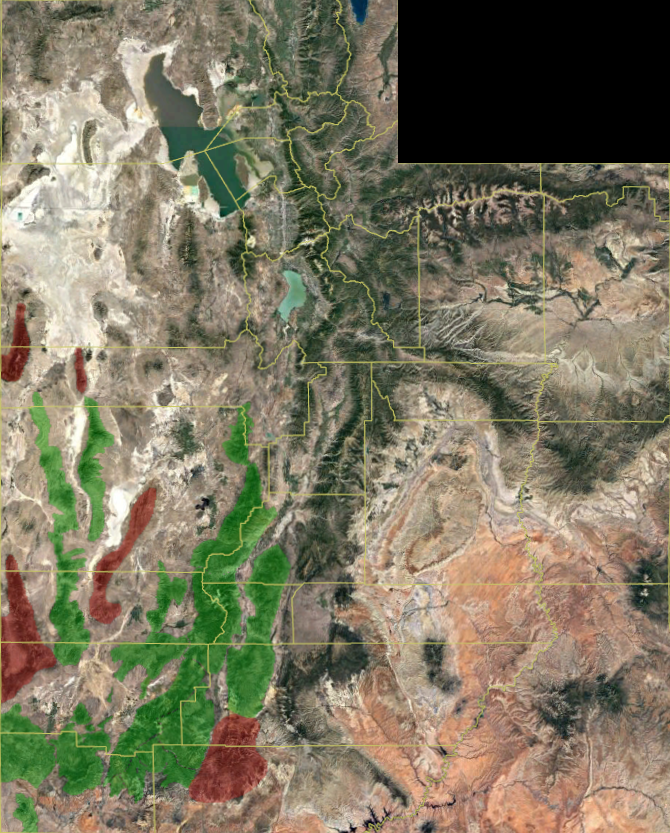
Possible Range
Known Range
 The Reptiles and Amphibians of Utah